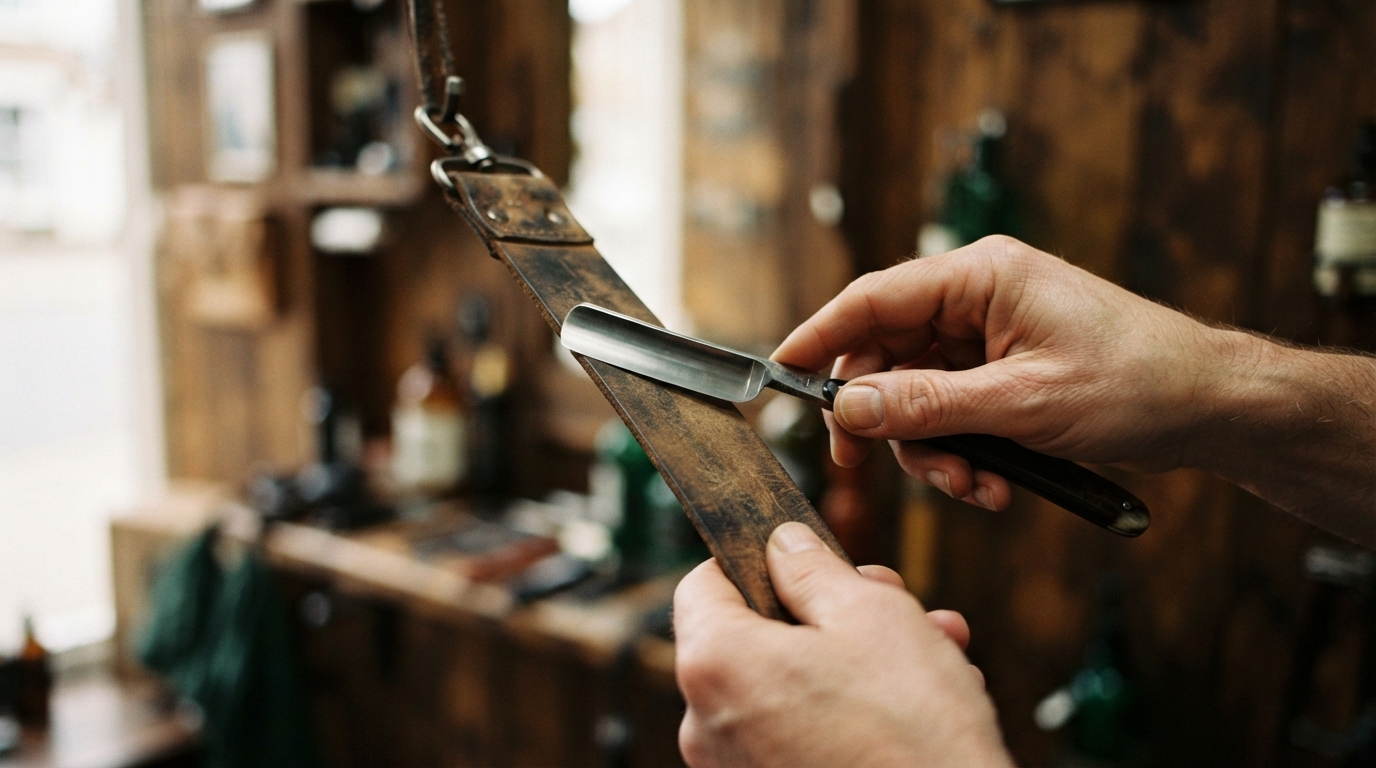
A barbershop is a face-to-face service business, with revenue generated per appointment and a strong dependence on location, routine, and delivery standard. You need to decide whether you will operate with walk-ins, scheduled appointments, memberships, or a mix of these formats, because that changes occupancy, cash flow, and predictability.
It is also a business where experience matters as much as the cut. Environment, waiting time, pricing clarity, and service consistency influence whether customers come back and recommend you, so planning needs to start before the first chair is in place.
- in-person service
- schedule and queue
- recurring service
- delivery standard
What you need to understand before moving forward
What service format makes sense?
You need to decide whether the barbershop will rely on walk-ins, appointments, recurring packages, or a combination. Each format changes the pace of operations, revenue predictability, and how you organize the team.
Who is the customer you want to serve?
It is not enough to think about men as a generic audience. You need to define price range, visit frequency, service expectations, and the most in-demand type of service, because that determines the barbershop’s positioning and the ticket size you can sustain.
Which services should you start with?
Haircuts, beard work, finishing, eyebrow grooming, and other services expand revenue, but they also increase complexity. It is worth separating what will be the core offer from what comes later, so you do not build a larger operation than your initial demand can support.
How many chairs and how many barbers do you really need?
This is not an aesthetic decision, it is a capacity decision. You need to estimate how many appointments each professional can handle per day, how long each service takes, and what level of occupancy makes the structure coherent with the expected flow.
How will customers find the barbershop and come back?
In a barbershop, referrals, local presence, and repeat business usually matter more than broad advertising. You need to understand which channels will bring the first customers and what routine will keep them returning regularly.
The critical points of this business
Location
For a barbershop, the address needs to combine visibility, easy access, and alignment with the audience you want to serve. You should validate whether the area supports the positioning you chose and whether the surrounding flow matches the type of service you plan to sell.
Offer
The service list should be lean at the start and consistent with the level of delivery you can maintain. A barbershop sells technique, consistency, and experience; if the mix is confusing, customers do not know what to expect and the operation loses focus.
Operations
Service time, hygiene, material replenishment, and schedule organization are central variables. You need to map how the customer enters, waits, is served, and leaves, because any failure shows up quickly in the perception of quality.
People
The result depends heavily on the skill and attitude of the people serving customers. You should evaluate how you will hire, pay, train, and keep standards aligned across barbers, because the customer experience cannot vary too much from one professional to another.
Financials
Before opening, you need to turn chairs, staff, rent, supplies, and marketing into cash flow. The practical question is whether the expected occupancy covers the structure without relying on constant improvisation.
Regulation
Licenses, health rules, and location-related obligations need to be resolved before operations begin. In a personal service business, that prevents interruptions and reduces the risk of getting the opening right in theory and wrong in practice.
What can compromise the business
Choosing the location based only on traffic
Traffic helps, but it does not solve everything. If the location does not match the audience, the price, and the experience you want to sell, the barbershop may attract people who never come back.
Opening with too many services
Trying to offer everything from day one usually increases service time, inventory needs, and the chance of mistakes. The best approach is to start with an offer you can execute consistently and expand later, once you understand what actually moves.
Depending on one barber only
When the operation revolves around one person, both quality and revenue become exposed to any departure, absence, or drop in pace. You need to think in terms of process and standard, not just individual talent.
Underestimating repeat business
A barbershop does not survive on first-time visits alone. If you do not create a clear reason for customers to return, the schedule becomes irregular and the business ends up depending on constantly acquiring new clients.
Building a structure above demand
More chairs, more staff, and higher rent than the real occupancy can support put pressure on cash flow from the start. Before investing, it is worth testing whether the planned structure makes sense for the volume you can generate consistently.
Turn these questions into decisions
For a barbershop, the most expensive mistake is usually opening before deciding the business model and the logic behind chair occupancy. When you structure that clearly, it becomes easier to separate what is a hypothesis from what is a bet, and to build a plan that makes sense for the location, the team, and the cash flow.
Business Scope
It helps you turn the barbershop idea into a clear thesis: audience, value proposition, initial services, and critical bets. That organizes decisions about service format, service mix, and positioning before any major spending.
Market Intelligence
It is used to structure your reading of the surroundings, the audience, and local competitors with the information you gather. This is where you compare customer profile, price level, and the most coherent entry point for the barbershop.
Operational Plan
It helps you design the barbershop’s day-to-day routine, from scheduling to service delivery, including team, suppliers, and structure. That is what supports decisions about capacity, service standard, and the initial mix.
Financial Modeling
It turns business choices into investment, costs, expenses, working capital, and projected cash flow. For a barbershop, this is what shows whether the expected occupancy matches the structure you want to build.
Before investing, you should know
- How many appointments per day does each chair need to generate to sustain the location?
- What share of revenue will come from haircuts, beard services, and other services?
- Will you operate with appointments, walk-ins, or a hybrid model?
- How many repeat customers do you need to keep occupancy stable?
- What is the average time each service takes in your operation?
- What is the minimum team structure you need to open without losing quality?
- Does the chosen location match the price point and customer profile you want to serve?
Sua ideia merece mais do que um palpite. Estruture o negócio, teste suas premissas e entenda se ele faz sentido antes de comprometer tempo e dinheiro.
Planejar meu negócio no Vibz