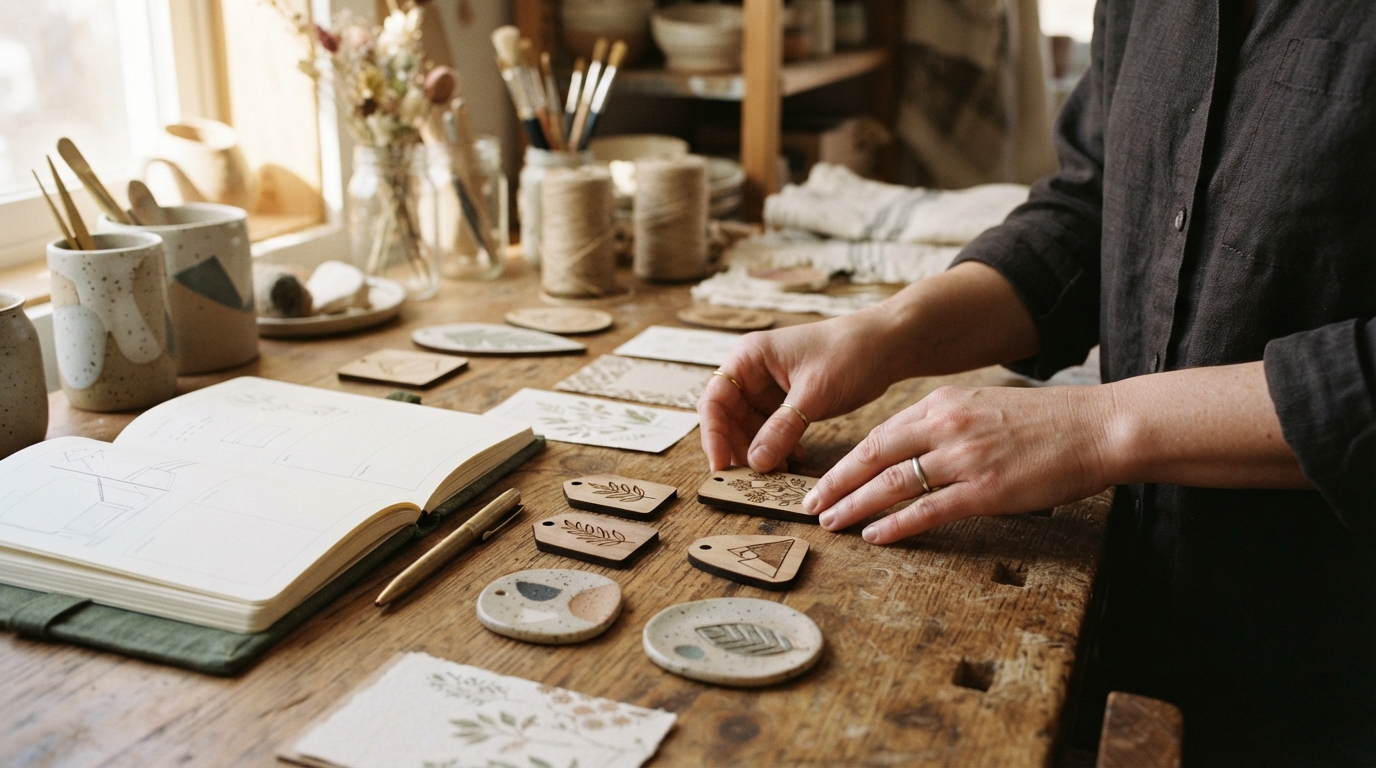
A personalized gifts store works with orders that change a name, a message, a theme, or the way the item is assembled. That affects inventory, production, customer approval, and delivery time, so the operation needs to be organized from the start.
Before investing, you need to know whether you’ll work with customized ready-made items, in-house production, or a mix of both. Each model changes margin, lead time, inventory needs, and the risk of rework.
- custom order
- delivery lead time
- mixed inventory
- made to order
What you need to understand before moving forward
Which orders will you accept?
You need to define what belongs in the catalog and what does not. In personalized gifts, saying yes to any idea usually increases delays, mistakes, and production costs.
What will actually be personalized?
Name, photo, artwork, packaging, assembly, or message all change the operation quite a bit. The more personalization steps you add, the more control you need over review, approval, and timing.
Will you produce or resell?
If production is in-house, you need to map time, materials, and capacity. If you resell, you need to validate replenishment time, finish quality, and supplier consistency.
What is the real delivery time?
This business depends on promising a lead time that matches the slowest step, not the fastest one. You need to measure how long it takes to approve the artwork, produce, package, and ship.
Which items sell most in your catalog?
Not every personalized gift is worth the same effort. You need to separate the items that sell often from the ones that only seem interesting, because that changes inventory, marketing, and commercial focus.
The critical points of this business
Offer
The offer needs to be clear and limited. If you sell too many different formats with very different types of customization, customers understand less and your operation becomes harder to repeat.
Operations
The approval, production, and packaging flow needs to be designed before the first sale. This business fails more often because of process gaps than because customers are not interested.
Financials
You need to calculate cost per item, personalization cost, packaging, losses, and rework. In personalized gifts, an order that is poorly priced can look good at the sale and bad in the result.
Suppliers
The consistency of materials and ready-made bases matters a lot. If the main item varies in quality or arrives late, the delivery promise to the customer is at risk.
Channels
Sales usually depend on a visual catalog, fast service, and confirmation of details. You need to decide where the customer will see the offer, how the customization will be approved, and how the order will be closed.
What can compromise the business
Catalog that is too broad
When you try to sell everything, inventory gets scattered and production loses consistency. It is worth testing a few formats with good repeatability before expanding.
Personalization without an approval flow
If the customer approves artwork, name, and message through scattered messages, the risk of mistakes goes up a lot. The best approach is to define a simple review routine before production.
Promised lead time with no buffer
This business suffers when delivery depends on several steps and none of them has room for delay. You need to know which step usually becomes the bottleneck and promise based on that.
Pricing without rework costs
Artwork errors, material swaps, and remakes happen frequently in this kind of operation. If that is not included in the calculation, the margin disappears in orders that seem healthy.
Turn these questions into decisions
In this business, planning before buying inventory or publishing the catalog helps avoid expensive mistakes. When you organize the model, the operation, and the numbers clearly, it becomes easier to decide what to sell, how to produce, and how far you can go with delivery promises.
Business Scope
Helps you define the store’s thesis: what kind of personalized gift you will sell, to whom, with what level of customization, and which bets need to be validated before expanding the catalog.
Operational Plan
Organizes the practical flow of the business, from order entry to delivery, including production, personalization review, suppliers, packaging, and sales channels.
Financial Modeling
Turns your decisions into numbers so you can see initial investment, cost per order, working capital, and the impact of rework and lead time on viability.
Deployment Cockpit
Helps you move from plan to action with short goals, clear tasks, and follow-up on what needs to be adjusted in the first orders.
Before investing, you should know
- How many personalized gift models will you offer at the start?
- Which step in the customization process takes the most time?
- How much does each item cost with personalization, packaging, and loss included?
- What delivery time can you meet without depending on customer urgency?
- Will you produce in-house or buy ready-made items to customize?
- Which orders will you turn down so you do not compromise the operation?
Sua ideia merece mais do que um palpite. Estruture o negócio, teste suas premissas e entenda se ele faz sentido antes de comprometer tempo e dinheiro.
Planejar meu negócio no Vibz