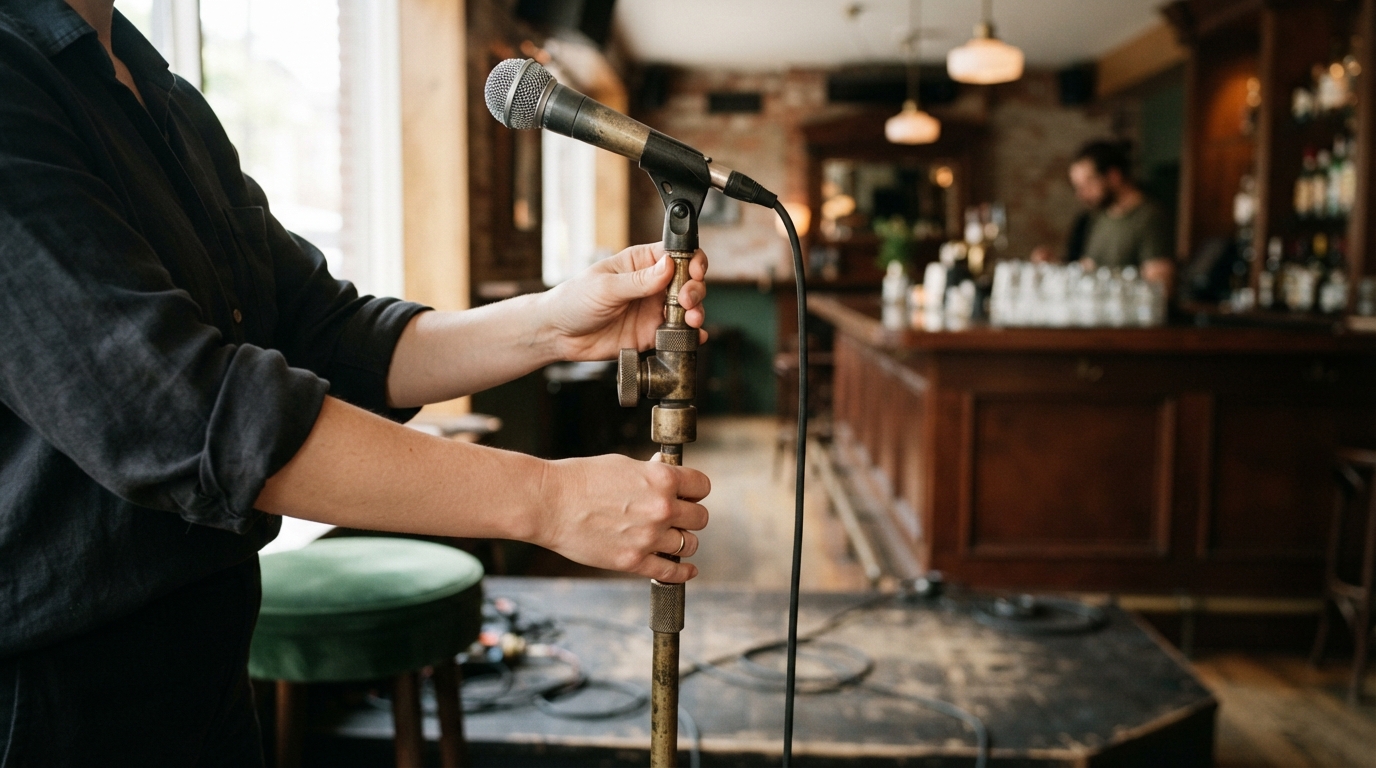
A live music bar does more than sell drinks at the counter. You need to balance audience, schedule, acoustics, neighbors, and operating costs so the programming makes sense in the cash flow, not just in the crowd.
This kind of business changes a lot depending on the neighborhood, the customer profile, and the type of act you can book regularly. What works for an original-music bar may fail for a covers bar, and that affects everything from the location choice to the venue setup.
- recurring schedule
- nighttime spending
- acoustics and noise
- sensitive neighbors
What you need to understand before moving forward
Which audience do you want to attract?
You need to define who should come back regularly, on which days, and for what reason. That guides the music style, the expected ticket size, peak hours, and even the kind of drinks and food that make sense to sell.
Will the lineup be fixed or variable?
The answer changes how predictable the business is. A fixed schedule helps build visiting habits, while a loose lineup makes promotion, booking, and cost control harder.
Can the location support live music?
Before signing anything, check noise rules, possible soundproofing, allowed hours, and the relationship with nearby neighbors and condominiums. In a live music bar, location is not just about traffic; it is also about operational tolerance.
Will you charge a cover, ticket, or rely on consumption?
This setup defines how the venue pays the act and how the customer perceives value. If you don’t decide this early, you risk a full house with tight margins, or losing people because the charge was poorly explained.
Can the kitchen keep up with the night?
If there is food, it needs to run at the same pace as the music and the bar. A menu that is too long, slow prep, or too few people on shift will break the experience right when the house is busiest.
Which acts can you book consistently?
The business depends on repeating nights with enough quality for people to come back. It is worth mapping whether you can maintain a lineup of artists that fits your positioning and the budget the bar can handle.
The critical points of this business
Market
You need to understand whether there is real demand for live music in the area and which style has the strongest fit. It is not enough to know there is nightlife; you need to identify what that audience is willing to pay, which days they go out, and what kind of experience they are looking for.
Offer
The concept needs to bring drinks, food, sound, and atmosphere together without conflict. In a live music bar, the menu, volume, and length of the sets directly affect how long customers stay and how often they return.
Operations
The venue needs to run with quick service turnover, entry control, stage setup, soundcheck, and closing at a defined time. If those processes are not clear, the night turns into improvisation and operating costs rise before you notice.
Financials
Planning needs to separate fixed venue costs, programming costs, and variable costs per night. Only then can you see how many nights need to perform well to support the operation and which event formats fit your cash flow.
Location
For this business, the spot needs to balance visibility, access, and noise tolerance. An address that is too sensitive can limit the music; one that is too isolated may require much more sales effort to fill the room.
Regulation
You need to validate permits, local requirements, operating rules, and sound restrictions before investing heavily. In a live music bar, the regulatory side can completely change the operating model and the hours you can generate revenue.
What can compromise the business
Choosing the location based only on foot traffic
A busy daytime location can be a poor fit for live music at night if the area has noise restrictions, limited parking, or a customer profile that does not stay long. Check how the street actually behaves at night, not just how much traffic it seems to have.
Programming that does not match the audience
When the style of the acts changes too much, customers stop understanding what the venue stands for. That weakens repeat visits and makes it harder to build a predictable commercial schedule.
Booking costs above the venue’s capacity
If paying the artist only works with very high occupancy, the operation becomes fragile. You need to know how much the house can support per night and which mix of cover charge, consumption, and calendar covers that cost.
A menu that does not fit the rhythm of the night
Food that takes too long, requires too much production, or depends on a large team hurts service during peak hours. In a live music bar, people have little patience for friction when ordering, receiving, and staying at the table.
Ignoring neighbors and noise
Even with a strong concept, the business can lose operating capacity if complaints keep coming in, hours are restricted, or soundproofing is hard to achieve. Before opening, it is worth understanding what the area accepts and what local law allows.
Turn these questions into decisions
For a live music bar, what separates a good idea from a viable operation is clarity about audience, programming, cost, and the limits of the location. Vibz helps you organize those decisions before you commit capital, so the plan starts with the right questions instead of loose assumptions.
Business Scope
Use this stage to turn the idea into a testable thesis: what the bar format is, what problem it solves for the customer, and what value proposition makes sense for your area. Here you organize the bets around audience, repertoire, spending, and visit frequency.
Market Intelligence
This stage helps you structure your reading of the surroundings, the buyer profile, and the entry strategy. It is where you compare what you intend to offer with the real behavior of the neighborhood, competitors, and demand for live music nights.
Operational Plan
Here you map how the venue will actually run: programming, service, kitchen, entry, table flow, suppliers, and staff. For this kind of business, that is what prevents improvisation on busy nights and helps separate the attraction from the operation.
Financial Modeling
This stage turns your decisions into numbers, including investment, fixed costs, per-show costs, working capital, and revenue scenarios. This is where you test whether the model can handle weak nights, schedule changes, and the difference between weekdays and weekends.
Before investing, you should know
- How many nights per week do you need to book music to keep people coming back?
- What is the total cost of each night, including the act, staff, and venue operations?
- How much does the venue need to sell in drinks and food per night to cover fixed costs?
- Which charging model makes the most sense for your audience and your margin?
- Does the location allow live sound at the hours you want to operate?
- Can the kitchen and bar handle the expected volume without slowing down the room?
- Can you build an act schedule that fits the venue’s positioning?
Sua ideia merece mais do que um palpite. Estruture o negócio, teste suas premissas e entenda se ele faz sentido antes de comprometer tempo e dinheiro.
Planejar meu negócio no Vibz