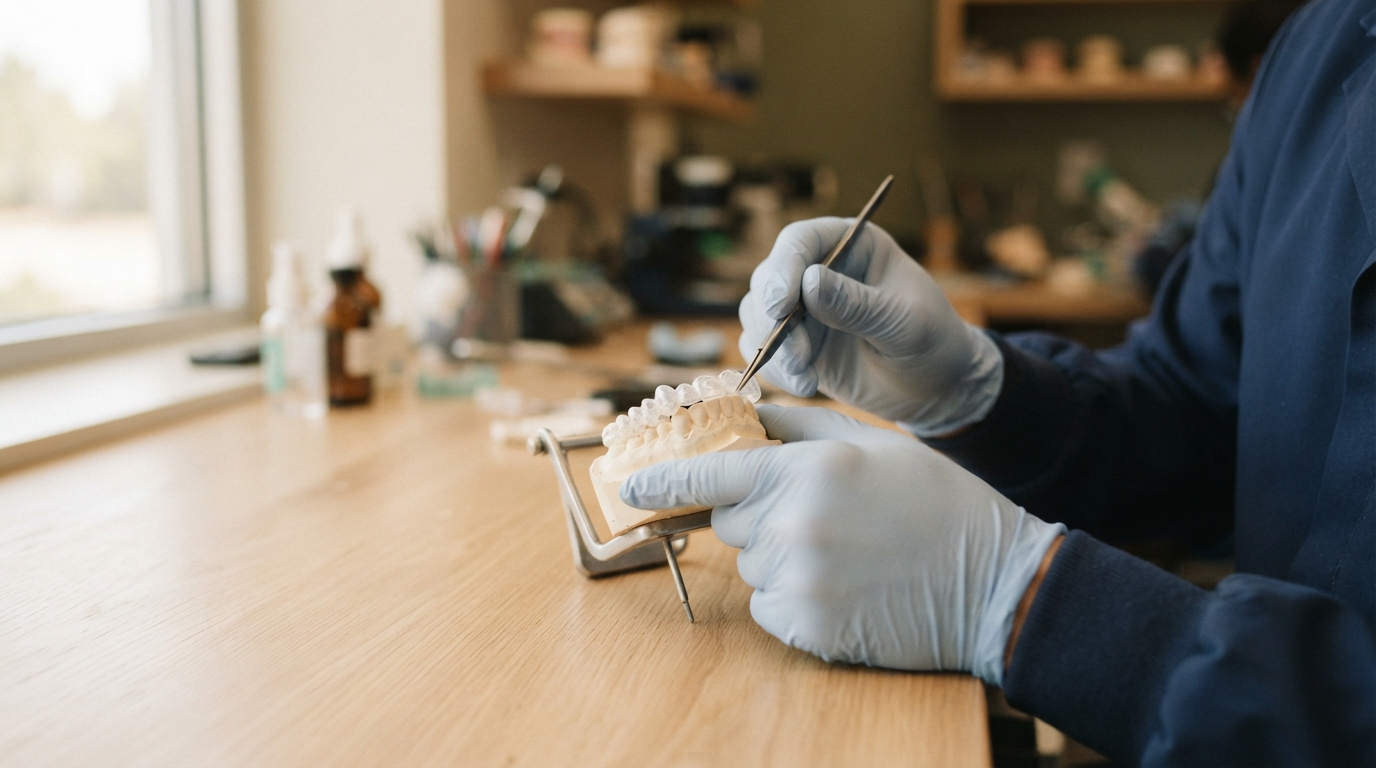
A dental implant clinic does not rely on simple patient volume. It depends on trust, referrals, clinical judgment, and the ability to guide the patient through a process that may involve diagnosis, planning, surgery, prosthetics, and follow-up.
That changes the business logic. What matters here is not just opening a dental room, but validating whether you have demand that fits this kind of procedure, a qualified team, an adequate clinical setup, and a commercial flow that turns interest into treatment.
- Specialized care
- Higher ticket
- Consultative flow
- Post-op
What you need to understand before moving forward
Are your patients looking for implants or for price?
You need to understand whether the patient who reaches you is looking for clinical resolution, aesthetics, and safety, or simply the cheapest option. In implants, the buying decision often depends heavily on trust in the professional, the clarity of the treatment plan, and the predictability of the outcome.
Will you handle your own cases or referrals?
This business changes a lot depending on where patients come from. If the clinic depends on referrals from other dentists, you need to know how that relationship will be built and maintained. If acquisition is direct, the clinic needs a consistent sales process and local presence.
Can the clinic setup handle surgery and prosthetics?
Not every dental office is ready for implants. You need to confirm whether the physical space, equipment, and clinical routine can handle exams, surgery, sterilization, follow-up, and, when needed, prosthetic rehabilitation.
Who performs each stage of the treatment?
In implants, the division between evaluation, surgery, prosthetics, and follow-up directly affects the quality and cost of the operation. You need to decide what will be done by you, what will be done by partners, and what requires a permanent hire inside the clinic.
Can your sales process close long treatments?
In many cases, the patient does not decide everything in the first conversation. You need to know whether your team can handle pricing, stage-by-stage explanations, follow-up, and objections without losing the case along the way. Here, conversion depends as much on the clinical side as on commercial clarity.
The critical points of this business
Market
You need to map who actually looks for implants in your area, which profiles value clinical safety, and which channels bring patients with a better fit for treatment. In a service like this, the problem is not just generating leads, but attracting the right patient.
Offer
The clinic needs to make it clear whether it sells surgery only, full rehabilitation, or a broader line of associated dentistry. That definition affects positioning, team, equipment, appointment length, and how the patient understands the value of the treatment.
Operations
The operation needs to be designed for care delivered in stages, with scheduling, sterilization, clinical records, follow-up, and post-procedure support. If the process is improvised, the clinic loses efficiency and increases the risk of follow-up failures.
Financials
The investment and cash flow depend on how quickly treatments close and how payments come in across the stages. You need to model scenarios with shorter and longer treatments, because that changes the pressure on working capital.
Regulation
The clinic needs to operate within the requirements of dental practice, sanitary surveillance, and the rules that apply to surgical procedures and clinical records. Before opening, you need to confirm what your city requires in terms of structure, licenses, and operation.
People
Implants require a team aligned with technical standards and careful service. The clinic depends on professionals who can explain the treatment clearly, follow protocol, and keep consistency before and after surgery.
What can compromise the business
Opening without defining the procedure mix
If the clinic tries to sell everything at once, it becomes harder to position the offer and organize the operation. Implants, prosthetics, evaluation, and maintenance have different requirements, and mixing them without criteria usually creates commercial and clinical confusion.
Depending on referrals without a patient acquisition routine
Many clinics start by relying on a network of contacts and later discover that it does not sustain the schedule. You need to verify where patients will come from on a recurring basis, because implant practices are not built well on irregular demand.
Underestimating post-operative care
The treatment does not end with surgery. If the clinic does not have a process for follow-up, guidance, and monitoring, the experience worsens and clinical and reputational risks appear, affecting future cases.
Building a structure above real demand
Too much equipment, too much space, and too many people increase financial pressure before the clinic has a steady schedule. The right approach is to size the structure based on the type of case you want to handle and the expected procedure frequency.
What makes up the investment
Clinical room adaptation
The size of the investment varies depending on whether the property is already ready for dental use or needs adaptation. This includes layout, infrastructure, support areas, sterilization, and conditions for surgical care.
Equipment and instruments
The amount depends on the clinic's level of specialization and on what will be done in-house. An implant-focused operation requires a set of equipment, instruments, and support items compatible with surgery and follow-up.
Diagnostic technology
The investment changes depending on whether you only perform clinical assessment or bring in imaging and planning resources. The more the clinic internalizes diagnosis and planning, the greater the need for technological infrastructure tends to be.
Initial team
Team size depends on expected volume, the split between clinical care and administrative support, and how much you outsource. In implants, a poor hire shows quickly because the service demands precision and a sequence of steps.
Licenses and compliance
This component varies depending on the city, the property, and the type of operation you plan to open. Before starting, you need to consider sanitary requirements, professional documentation, and formal adjustments to the address.
Working capital
The need for starting cash depends on the time between patient entry, treatment closure, and payment receipt. Since implants can involve separate stages, you need enough financial room to get through that period without improvising.
These components change from city to city and from project to project. In Vibz you build your business's investment with your own numbers. Calculate the investment in Vibz
Turn these questions into decisions
In a dental implant clinic, the right decision comes from organizing the model before committing capital. When you structure audience, offer, operations, and financial flow with clarity, it becomes much easier to see what makes sense to open now and what still needs to be validated.
Business Scope
Helps you turn the clinic idea into a clear business thesis: which procedures you will offer, for whom, with what value proposition, and which assumptions need to be confirmed before opening.
Market Intelligence
Helps you structure the local market analysis, understand the patient profile looking for implants, and organize your reading of competitors and entry channels.
Operational Plan
Helps you design how the clinic will work in practice, from the first appointment to post-operative care, including processes, structure, team, and channels.
Financial Modeling
Helps you turn these decisions into numbers, projecting investment, costs, revenue, working capital, and scenarios to test viability before opening.
Before investing, you should know
- How many patients per month do you need to attract to sustain the structure you want to open?
- Which part of the treatment will be done by you, and which part will depend on partners or hiring?
- Does your location allow the structure and sanitary requirements your operation will need?
- How long, on average, is money tied up between the first consultation and the final payment?
- What is the main source of patients: referrals, professional network, or direct acquisition?
- Will the clinic start focused on implants, or will it mix that with other services from the beginning?
Sua ideia merece mais do que um palpite. Estruture o negócio, teste suas premissas e entenda se ele faz sentido antes de comprometer tempo e dinheiro.
Planejar meu negócio no Vibz