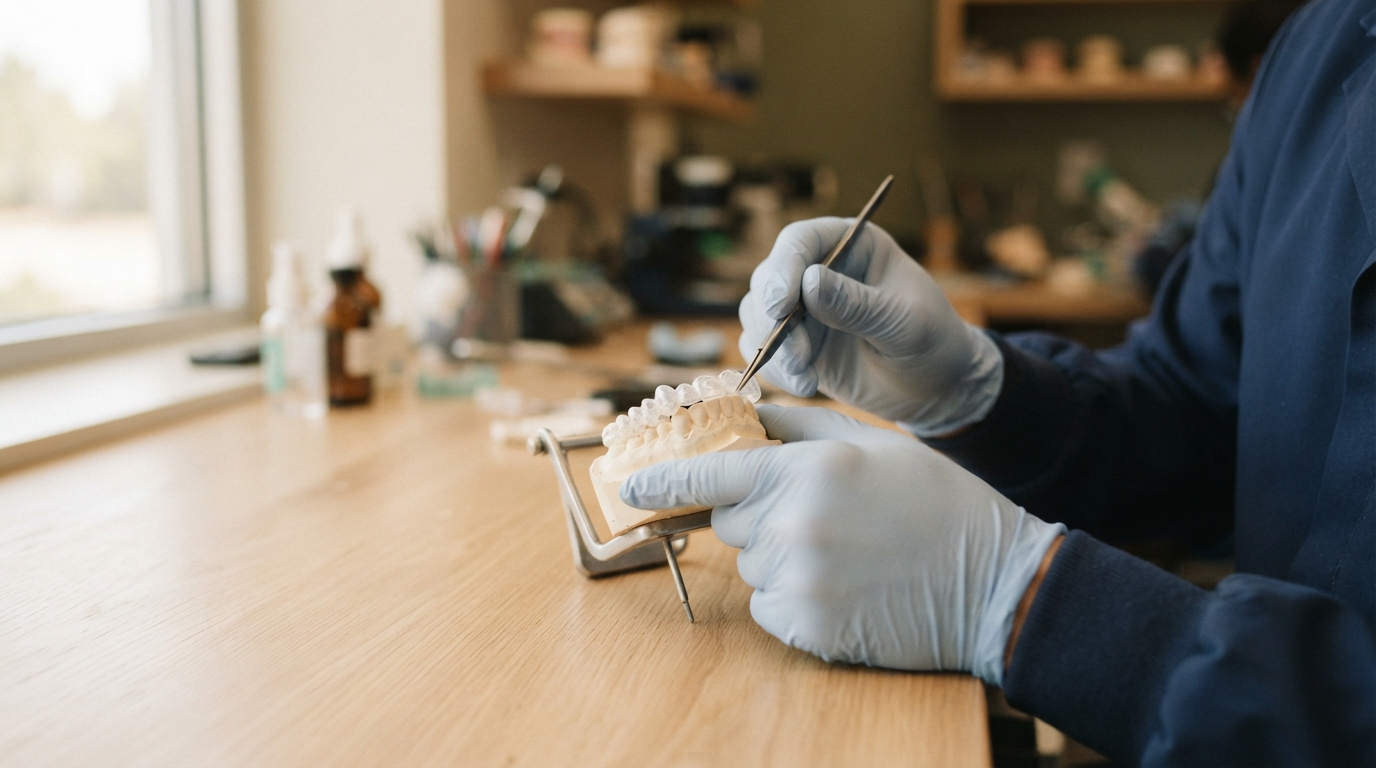
A pediatric dentistry practice has its own logic: the patient is the child, but the buying decision usually goes through the parents or guardians. That affects communication, appointment length, room layout, and even how you organize follow-up and retention.
Before opening, you need to understand whether your focus will be prevention, clinical treatment, or ongoing monitoring, because each model calls for a different schedule, space, and support structure.
- child care
- parent decision
- clinical setup
- recurring schedule
What you need to understand before moving forward
Will your audience find you through referrals, insurance plans, or direct search?
Each channel leads to a different acquisition and pricing logic. In pediatric dentistry, trust matters a lot, so you need to know where the first patients will come from and how much effort it will take to keep the schedule moving without relying only on spontaneous referrals.
Will the practice handle only pediatric dentistry or other specialties too?
This defines room usage, equipment purchases, and how the schedule gets filled. If the operation depends only on children, you need to assess whether local demand supports that focus or whether combining it with other services helps reduce downtime.
Do you have the structure to handle small children and anxious patients?
A dental chair is not enough. The environment, consultation time, team communication, and the way care is delivered all need to be designed to reduce resistance, because that affects return visits, referrals, and even dropout rates during treatment.
Is the location convenient for families with children?
The decision to take a child to the dentist usually takes into account travel time, parking, safety, and convenience for the adults involved. If the location is hard to access, you can lose patients even with a strong clinical reputation.
Does your model depend on one-off procedures or long-term follow-up?
Pediatric dentistry can generate frequent return visits when the offer includes prevention and monitoring. If you do not define that from the start, you may end up with a practice that lives off first appointments but never turns them into continuity.
The critical points of this business
Market
You need to understand the density of families with children in the area, income profile, and the presence of competitors already positioned in child care. What matters here is not just the number of residents, but the ability to turn that audience into repeat appointments.
Offer
The offer needs to be clear: prevention, clinical treatment, pediatric emergencies, developmental follow-up, or a combination. In pediatric dentistry, the offer shapes how parents perceive you and defines the kind of structure, language, and schedule that makes sense.
Operations
The practice needs to run with appointment times suited to children, a welcoming approach, and an organized follow-up process. If the operation is planned like a standard adult practice, the routine tends to get stuck in long appointments, rescheduling, and low predictability.
Location
The address needs to be practical for the person bringing the child, not just visible. Access, parking, easy entry, and a sense of safety matter more than in many health services, because the guardian weighs convenience against the effort of leaving home.
Financials
You should separate the investment in clinical setup from the working capital needed to carry the first few months until the schedule gains momentum. Since occupancy does not start full, the projection needs to account for ramp-up time, procedure mix, and the most common payment method in your audience.
Regulation
The clinic needs to open in compliance with health regulations, professional rules, and space documentation requirements. In healthcare, improvisation is expensive, so it is worth validating from the start what is required for the property, equipment, and practice operations.
What can compromise the business
Building an adult setup for a child-focused practice
If the space is not prepared for the child’s experience, appointments become harder and return visits drop. Check reception, room layout, visual communication, waiting time, and entry flow before finalizing the setup.
Depending only on first appointments
A well-structured pediatric dentistry practice needs to generate follow-up, not just isolated visits. If you do not design a return and prevention routine, the practice ends up constantly looking for new patients, which makes operations more expensive.
Choosing a location that is not practical for families
Even a good professional loses conversions when access is poor for the person accompanying the child. Before deciding, look at ease of arrival, parking, and the convenience of the surrounding area for appointment times.
Offering more procedures than the schedule can handle
Expanding the service mix too much at the start can lengthen appointments and reduce routine predictability. The better approach is to validate which services you can deliver with quality, adequate time, and a structure aligned with expected demand.
What makes up the investment
Space adaptation
The size of the investment varies according to the condition of the property, the need to adapt it for clinical care, and the level of comfort you want to offer families. In pediatric dentistry, room layout and reception design matter more than in practices that are less sensitive to the patient experience.
Clinical equipment
The cost changes depending on equipment standards, the number of chairs, and the resources needed for the type of procedures you plan to perform. If the practice is only for children or also serves other services, the list changes a lot.
Initial instruments and supplies
This component depends on the service portfolio, consumption predictability, and the need to keep child-specific items on hand. The broader the procedure scope, the wider the range of materials that must be available from the start.
Documentation and compliance
The size of this item varies depending on the property, the city, and the requirements to operate properly as a health service. You need to account for registrations, adjustments, and any changes required to open without pending issues.
Working capital
The need changes depending on how long it takes for the schedule to become consistent, the billing model, and the weight of fixed costs at the location. In a new practice, this cushion is what keeps operations running while the patient base is still being built.
These components change from city to city and from project to project. In Vibz you build your business's investment with your own numbers. Calculate the investment in Vibz
Turn these questions into decisions
Before investing, what decides this business is clarity around the audience, the offer, and the care structure. In Vibz, you organize these decisions in stages, compare scenarios, and turn the practice idea into a plan you can review before committing capital.
Business Scope
It helps you define whether the practice will focus purely on pediatric dentistry or combine it with other lines, while making clear the problem you solve for parents and children.
Market Intelligence
It helps structure your reading of the audience, the competition, and the entry strategy, especially to understand who buys, how they decide, and why they would choose your practice.
Operational Plan
It organizes the practice’s operations, from patient flow to processes, from the physical setup to the team, before you buy equipment or commit to a location.
Financial Modeling
It turns the practice decisions into projections for investment, costs, revenue, and working capital, so you can test viability before opening.
Before investing, you should know
- How many first appointments per month do you need to sustain operations at the start?
- What will the mix be between prevention, treatment, and ongoing follow-up?
- Does the chosen location make access easier for families with small children?
- How much time will each type of appointment require on average?
- Which equipment is indispensable, and which can be added later?
- Does your model depend more on referrals, insurance plans, or direct patient acquisition?
- Which compliance requirements need to be resolved before opening?
Sua ideia merece mais do que um palpite. Estruture o negócio, teste suas premissas e entenda se ele faz sentido antes de comprometer tempo e dinheiro.
Planejar meu negócio no Vibz