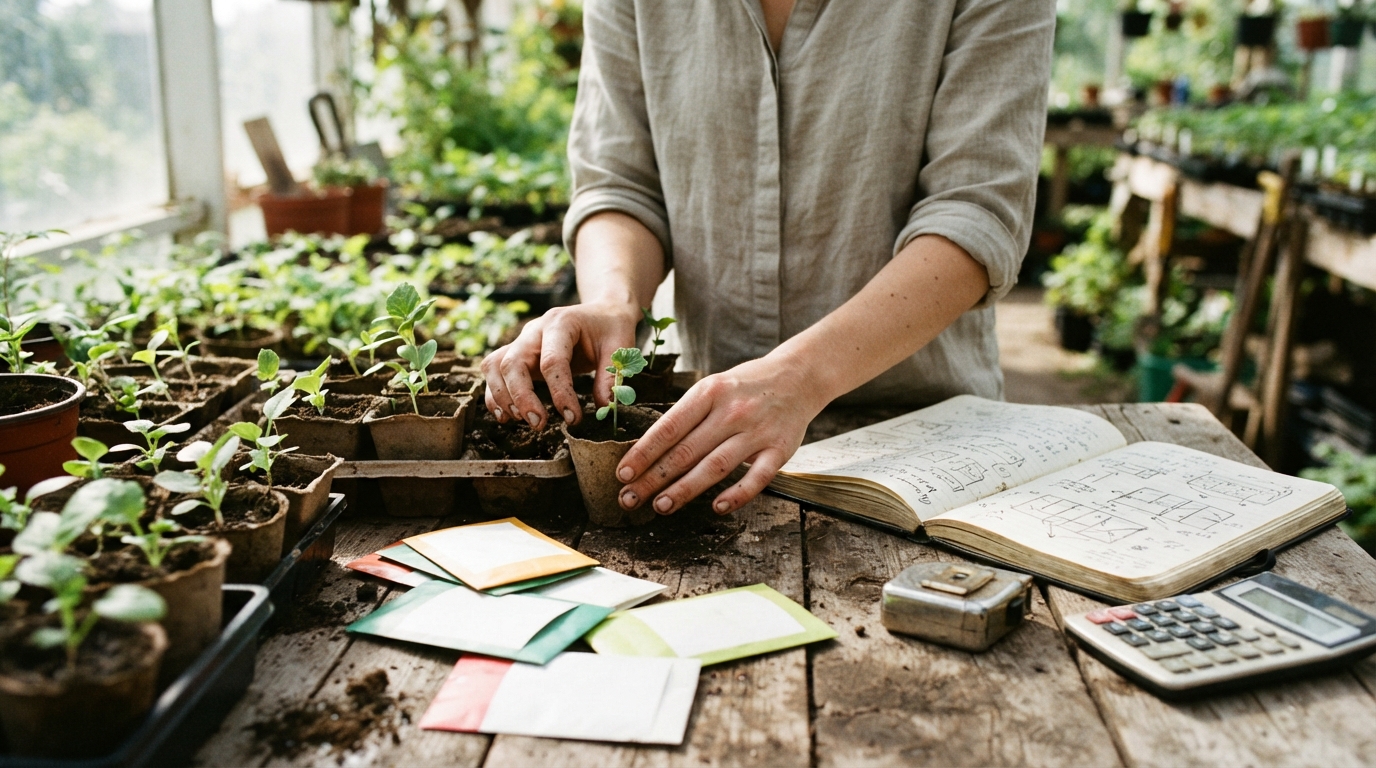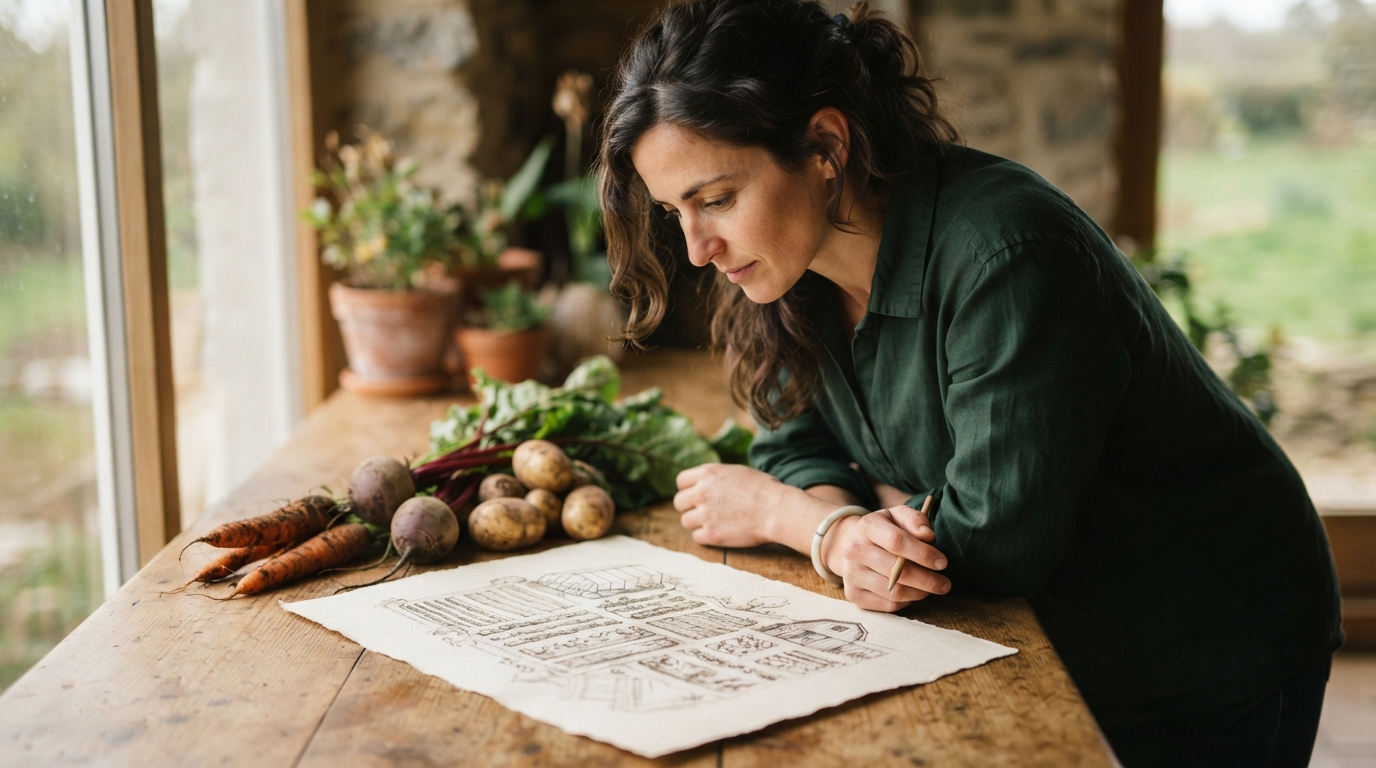
An organic vegetable operation takes more than knowing how to grow. You need to decide whether you will sell directly to consumers, to restaurants, at farmers' markets, through produce boxes, or to intermediaries, because each channel changes volume, quality standards, harvest frequency, and delivery demands.
It is also a business sensitive to the production calendar, climate-related losses, and labor needs in short, repeated stages. Those who enter without planning variety, usable area, and output often find out too late that the problem is not producing. It is selling at the right pace.
- frequent harvest
- perishable product
- ongoing management
- recurring sales
What you need to understand before moving forward
Who are you going to sell to?
You need to decide whether sales will be direct, by subscription, at a market, to retail, or to repeat buyers. That changes packaging standards, supply consistency, and the level of variety your area needs to support.
Which crops fit your area?
Not every vegetable makes sense in the same space or on the same cycle. Before investing, compare production time, climate sensitivity, and how species work together so you know what can actually come out of your land with consistency.
Can you keep supply going through the year?
Organic vegetables lose value when regularity breaks down. It is worth mapping which months tend to have lower output, which crops can fill the gaps, and whether you have the water, management, and schedule to avoid supply holes.
Can your structure handle losses and rework?
In vegetables, seedling loss, irrigation failure, pest pressure, and harvesting at the wrong stage hit margins quickly. You need to understand where the bottlenecks are in your setup before taking on a mix larger than you can manage.
Will you sell with certification, during transition, or without a seal?
The way you prove organic production changes the type of customer you can serve and the level of organization required. This decision needs to be made early, because it affects records, internal control, and market positioning.
The critical points of this business
Market
You need to know who buys regularly, what presentation standard that buyer expects, and whether your initial volume can meet demand without breaks. In organic vegetables, selling to a channel that asks for more consistency and variety than your area can support is a common mistake.
Supply
The combination of species, cycles, and planting calendar determines whether the operation works. The point is not to have many options, but to choose a mix that makes sense for your labor, your climate, and the customer's delivery window.
Operation
The routine for irrigation, pest control, harvesting, and post-harvest handling needs to be simple enough to repeat without failure. If the process depends too much on improvisation, quality varies and losses increase exactly in the product that spoils fastest.
Financial
You should turn area, expected yield, losses, packaging, transport, and labor into a cash plan. Without that, it is easy to confuse possible revenue with money actually available to keep planting.
Location
Distance to the customer, water access, and ease of distribution matter more here than in many other rural businesses. Organic vegetables do not handle long transport or late delivery well, so the map of the operation matters from the start.
Regulation
The way you classify organic production needs to be clear before the first sale. You must understand what will be required to prove origin, keep records, and avoid promising the customer something your operation cannot yet support.
What can compromise the business
Choosing crops without looking at the harvest calendar
If all crops peak in the same period, you create excess in one month and shortage in the next. The result is product loss, pressure on the team, and difficulty keeping repeat customers.
Entering a channel that demands more consistency than your area can deliver
Selling to a buyer with frequent orders sounds attractive, but it can stall the operation if your production swings too much. Before closing that channel, check whether your area, irrigation, and management can sustain the pace required.
Underestimating post-harvest losses
Organic vegetables leave little room for delay between harvest, washing, packaging, and delivery. If you do not account for loss, leftover product, or rework, the numbers look better on paper than they do in practice.
Building a mix that is too large for the start
Too many species at once increase management complexity, input purchasing, and harvest organization. It is better to start with a set you can follow well than to expand variety before mastering the routine.
Not defining how organic production will be verified
If the commercial offer is not aligned with what you can prove, you limit sales channels and create a risk of inconsistency in communication. That definition needs to come before expansion, not after.
Turn these questions into decisions
In organic vegetables, the plan is not there to decorate the idea. It helps you decide what to plant, who to sell to, how to organize the routine, and how much you need to produce to avoid relying on improvisation. That is what Vibz helps you organize.
Business Scope
It helps you define the business thesis: which vegetables you will produce, for which audience, with what value proposition, and which bets need to be validated before you expand the area.
Market Intelligence
It organizes the analysis of who buys, which channels make sense, how the competition positions itself, and which customer profile matches the consistency your production can deliver.
Operational Plan
It structures operations before purchase or planting: product mix, cultivation processes, suppliers, team, packaging, and sales channels, reducing improvisation in the routine.
Financial Modeling
It turns area, losses, labor, transport, and packaging into numbers so you can test whether the operation works before committing capital and time.
Before investing, you should know
- How many beds or square meters of usable area do you really have for consistent production?
- Which vegetables can you deliver with a steady standard throughout the year?
- Which sales channel do you want to prioritize at the start, and what does it require?
- How much of the production can be lost without putting the business at risk?
- What will be your way of proving organic production, and can you sustain it from day one?
- How much do you need to invest in irrigation, structure, packaging, and logistics before the first sale?
- How many deliveries per week can your operation handle without losing quality?
Sua ideia merece mais do que um palpite. Estruture o negócio, teste suas premissas e entenda se ele faz sentido antes de comprometer tempo e dinheiro.
Planejar meu negócio no Vibz