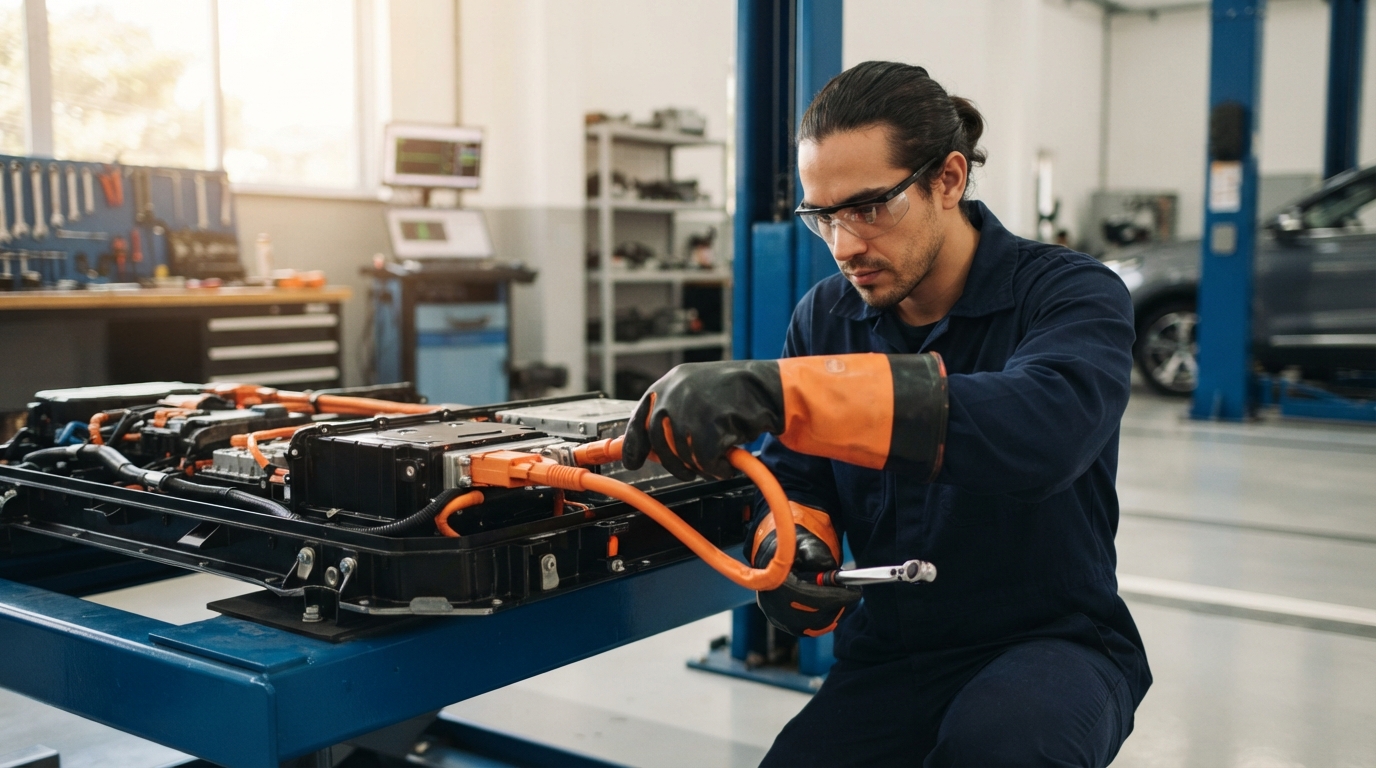
An auto repair shop brings together technical service, trust, and an uneven flow of customers. People almost never buy on impulse; they arrive with a problem, compare signs of competence, and want a clear diagnosis, a realistic deadline, and a delivery without rework.
That changes how you plan. You need to decide whether you will work with preventive maintenance, corrective repairs, electrical work, suspension, engines, air conditioning, or a limited mix of services, because each choice changes the space, the team, the tools, the inventory, and the time each job takes.
- technical service
- uneven flow
- service mix
- costly rework
What you need to understand before moving forward
What kind of fleet will you serve?
Compact cars, utility vehicles, newer models, and company fleets all require different setups. The fleet profile defines the kind of work you can do, the level of customer expectations, and the need for specific tools.
Which services will you take on at the start?
If you try to cover general repair from day one, the operation usually gets messy. It is better to define what you will take in, what you will leave out, and what will be outsourced, because that affects lead time, margin, and customer trust.
Can you diagnose before taking things apart?
A good shop does not survive on parts replacement alone. If diagnosis is weak, you waste time, buy the wrong item, and increase the chance of rework, so you need to know which failures your team can identify with confidence and which ones require stronger technical support.
Does your space fit the operation you want to sell?
The layout of the bays, the waiting area, the inventory, and vehicle access all need to match the expected volume. A shop can look viable on paper and still stall in practice if the layout does not allow movement, service separation, and organized work orders.
What level of service do you want to maintain?
Customers notice the difference between improvisation and process. You need to decide whether you will work with formal estimates, approval before execution, records of installed parts, and agreed deadlines, because that shapes how serious your shop feels and reduces conflict.
The critical points of this business
Market
You need to understand whether local demand comes from daily-use cars, fleets, older vehicles, or customers looking for specialized work. That defines the ticket size, how often people come back, and how much your shop depends on referrals or location.
Offer
The offer needs to be defined carefully. In a repair shop, the risk is not selling too much, but taking on services that require more knowledge, more tools, or more time than your setup can handle.
Operations
What determines quality here is the sequence of work: receive, diagnose, approve, execute, test, and deliver. If that routine is not clear, the shop turns into a pile of parked cars, scattered parts, and missed deadlines.
Financials
You need to separate initial investment, working capital, minimum inventory, and the cost of each type of service. A shop usually requires money to go out before revenue comes in, because tools, parts, and structure need to be ready to deliver consistently.
Location
Location matters because of access, maneuvering space, and the profile of vehicles in the area. It is not enough to be on a busy street; the site needs to allow cars to enter and leave, stay safe, and operate without improvisation.
People
The quality of the shop depends on technical skill and routine discipline. You need to know who diagnoses, who performs the work, who buys the parts, and who speaks with the customer, because confusion in those roles usually leads to mistakes and loss of trust.
What can compromise the business
Taking on too many services at the beginning usually leads to delays and rework. Before expanding your mix, check whether you have the tools, knowledge, and process for each type of repair you plan to sell.
Buying equipment before defining your service line ties up money in items that may take a long time to pay for themselves. The shopping list should come from the services you chose to offer, not from what seems nice to have on the bench.
Working without a written approved estimate increases conflict with the customer. In a repair shop, the difference between what was diagnosed and what was authorized needs to be clear before you take things apart or replace parts.
Underestimating minimum inventory delays repairs and slows delivery. If you do not define which parts and supplies need to be on hand, every job turns into a race to buy something that should already be within reach.
Choosing a location based only on rent can compromise the operation. A shop needs access, usable area, and working conditions that fit parked cars, maneuvering, and service, not just a cheap address.
Turn these questions into decisions
Understanding demand, scope, and operations before opening a repair shop helps you avoid expensive decisions made too early. That is the point where planning stops being a loose idea and becomes a set of choices you can test clearly, and Vibz organizes that for you.
Business Scope
It helps you define whether the shop will be general or specialized, which services are part of the offer, and which bets need to be validated before you invest in structure and tools.
Market Intelligence
It organizes the analysis of fleet profile, customer type, and local competition, so you can understand which demand makes sense to serve and which services are more likely to fit your context.
Operational Plan
It structures the shop’s routine, from vehicle intake to delivery, including services, processes, suppliers, team, and channels, before you hire or buy what you do not need.
Financial Modeling
It turns these decisions into numbers so you can project investment, costs, working capital, and cash flow, while testing scenarios before committing capital.
Before investing, you should know
- How many cars per week do you need to handle to support the structure you want to open?
- Which services can you perform safely from the start, and which ones would need to be outsourced?
- How much will it cost to put together the minimum set of tools, lifts, compressors, and diagnostic equipment for your offer?
- What will the initial parts and supplies inventory cost so you do not get stuck on the most common jobs?
- How much usable space do you need to receive cars, carry out repairs, and organize parts without improvisation?
- Who will diagnose, who will perform the work, and who will deal with customers day to day?
- What average turnaround time can you promise without compromising service quality?
Sua ideia merece mais do que um palpite. Estruture o negócio, teste suas premissas e entenda se ele faz sentido antes de comprometer tempo e dinheiro.
Planejar meu negócio no Vibz