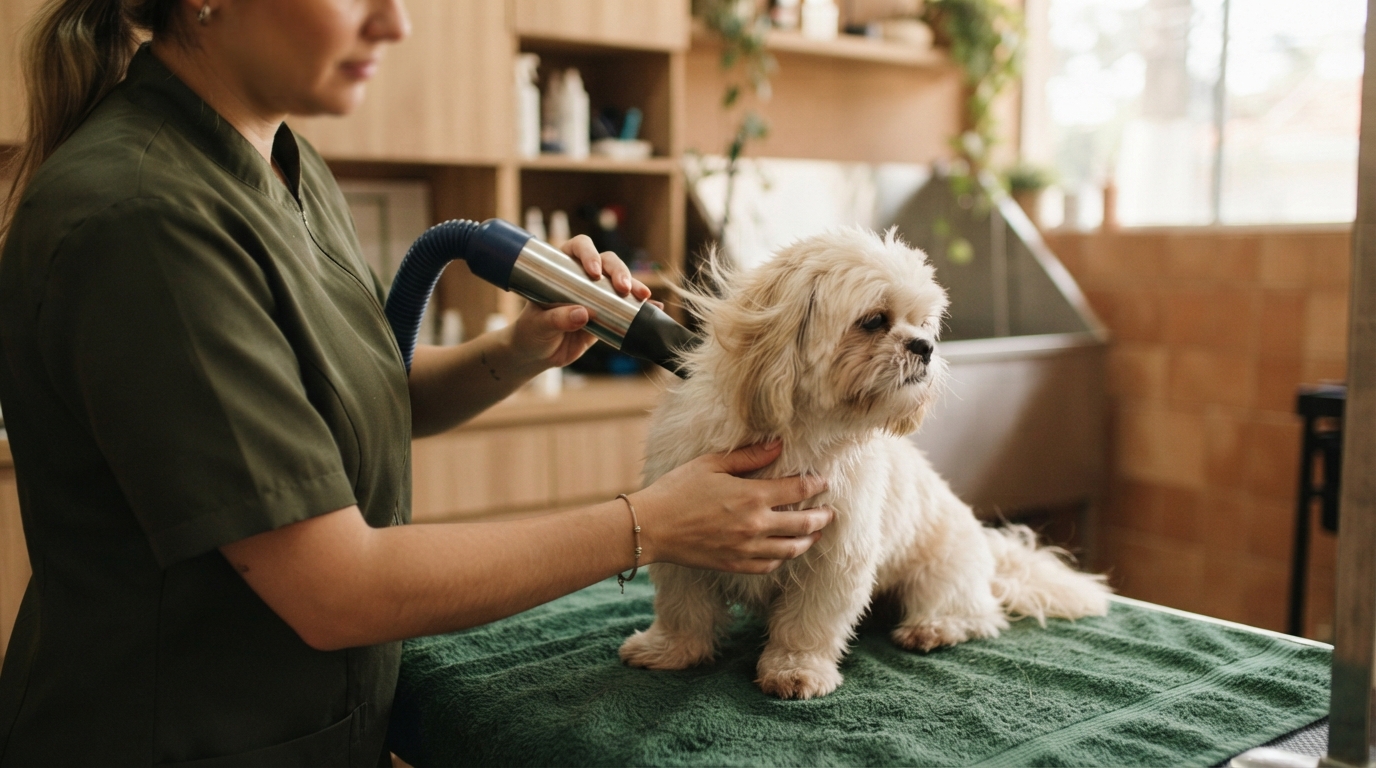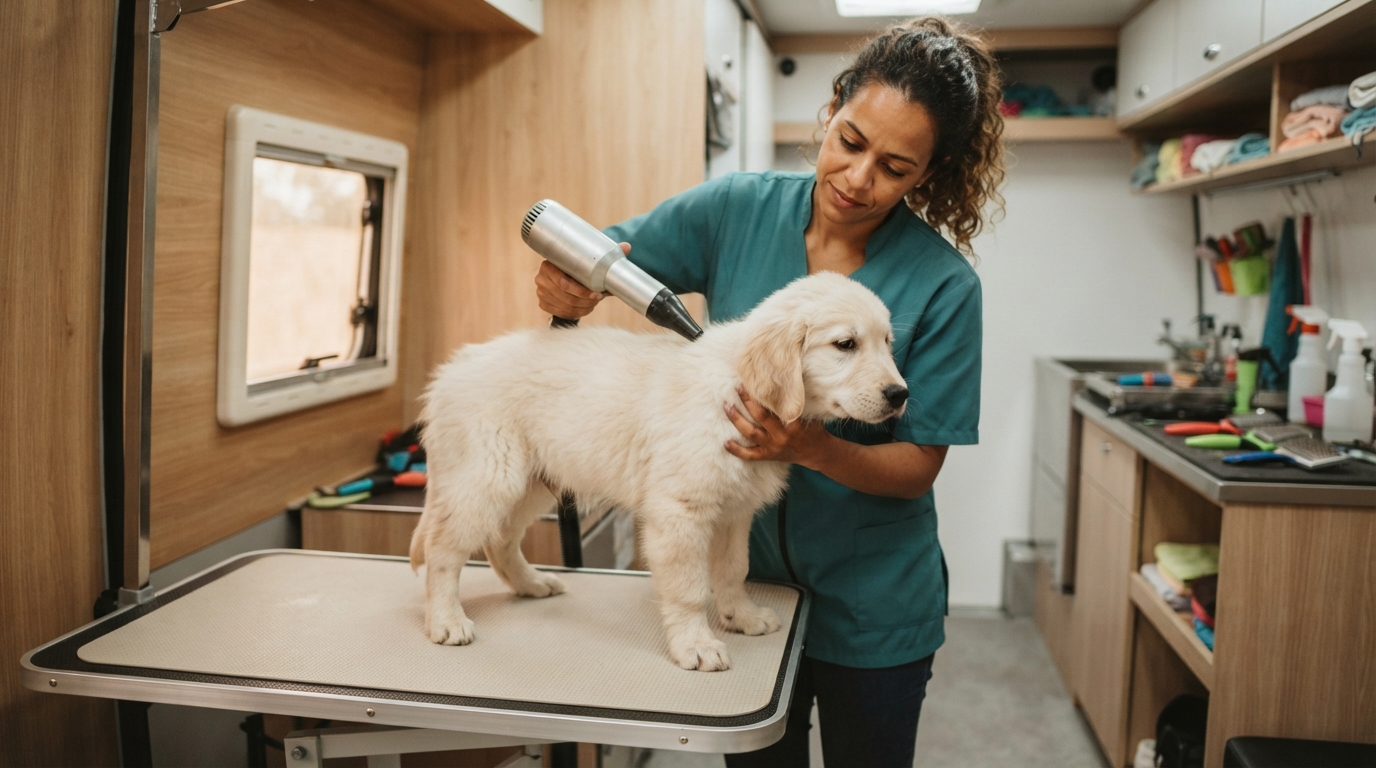
A mobile pet grooming business can work very well when you want to sell convenience, serve specific neighborhoods, and manage customer travel more efficiently. But the operation requires more planning than it first appears, because each appointment carries limits of space, time, and structure that a fixed location does not have.
Before investing, you need to understand whether you will work by appointment, which services fit inside the unit, how supplies will be replenished, and where the business will park and operate safely. In this kind of business, viability depends less on spontaneous traffic and more on the quality of the schedule, the route, and the real capacity to deliver.
- scheduled appointments
- travel route
- compact operation
- appointment-based service
What you need to understand before moving forward
Who will book on a recurring basis?
You need to know which customer profiles have routines that fit mobile service, such as pet owners who value convenience, have little time, or prefer to avoid traveling with their animal. That defines whether demand will be occasional or repeatable, and whether the schedule can hold up with predictability.
Which services fit inside the unit?
A basic bath, sanitary trim, full grooming, and additional care do not always fit the same structure. You need to decide what falls within the scope safely from an operational standpoint, because trying to offer more than the vehicle can support usually hurts time, quality, and margin.
How will the service route work?
You need to map neighborhoods, travel times, service windows, and customer concentration. In a mobile pet grooming business, the route is not a logistics detail; it determines how many appointments fit into the day and how much time is lost between one customer and the next.
Where will the vehicle operate?
You need to verify where you can park, serve clients, and wait without conflict with neighbors, condominiums, local rules, or safety issues. If the business depends on informal permission or the tolerance of the surrounding area, the operation becomes unstable and hard to scale.
Does the water, energy, and waste setup actually work?
You need to confirm how the vehicle will be supplied, how power will be used, and how water and waste will be handled. If that base is not well resolved, the service still happens, but with interruptions, rework, and higher operating costs than expected.
The critical points of this business
Market
The market here is not just interest in pets, but the customer's willingness to pay for the convenience of receiving the service where they are. You need to understand which neighborhoods, profiles, and routines justify the trip, and which customers still prefer taking the animal to a fixed facility.
Offer
The offer needs to be designed to fit the time and space of the mobile unit. That includes defining which breeds, sizes, and coat types you serve, which services are included in the package, and under what conditions you decline the appointment.
Operations
Operations are the heart of the business. You need to validate the flow of bathing, drying, grooming, sanitation between appointments, supply organization, and setup time so each visit does not create delays in the next booking.
Location
Here, location means route, stopping point, and coverage area, not a fixed address. The business depends on choosing regions where travel makes sense and where there is enough customer concentration to reduce unproductive time on the road.
Financials
The financial model needs to separate investment in the vehicle, internal conversion, maintenance, fuel, supplies, insurance, and travel costs. Without that, you may confuse revenue with viability and ignore the weight that mobile operations add to the cost structure.
Regulation
You need to check local requirements for circulation, parking, waste disposal, animal welfare, and service operation. In a mobile business, one ignored restriction can affect the entire operation, not just a specific step.
What can compromise the business
Choosing the vehicle before validating the operation. If the interior space cannot support the services you want to sell, the business becomes an improvised version of what was planned. Before buying, test the full flow with the service you intend to offer.
Serving an area that is too wide. When the route grows without discipline, travel time eats into the schedule and increases the cost per appointment. Define a coverage area that matches the number of customers you can realistically concentrate each day.
Promising services above the available structure. Grooming certain sizes, very restless animals, or baths that require more water and time may demand conditions the unit cannot deliver well. The problem shows up as delays, rework, and a poor customer experience.
Ignoring the supply and cleaning routine. Mobile pet grooming requires water replenishment, waste management, sanitation between appointments, and supply control. If this is not standardized, the operation loses speed and consistency.
Depending on an unstable schedule. If customers frequently book and cancel, the vehicle sits idle or runs underutilized. You need to test confirmation, rescheduling, and service policies before scaling.
Turn these questions into decisions
When you understand the route, the unit's capacity, and the customer profile that actually books, mobile pet grooming stops being a generic idea and becomes a business with a clear thesis. That is what planning organizes, and it is where Vibz helps structure decisions before you commit capital.
Business Scope
Here you turn the idea into a testable thesis: which services are included, who you serve, which problem you solve, and which assumptions need to be tested first.
Market Intelligence
Use this stage to organize neighborhood analysis, customer profile, competition, and entry strategy. It helps you decide where it makes sense to operate and what kind of demand is worth pursuing.
Operational Plan
This stage is the most important for mobile pet grooming, because it designs the service in practice: services, processes, suppliers, structure, team, and channels before the first meaningful purchase.
Financial Modeling
After the operational decisions, you turn everything into numbers. Here you project investment, costs, expenses, working capital, and cash flow to test whether the operation works with the schedule you intend to sell.
Before investing, you should know
- How many appointments per day can your mobile unit handle without compromising travel time, cleaning, and setup between clients?
- Which services will you offer at the start, and which ones stay out of the operation until the structure proves it can handle them?
- Which coverage area actually concentrates customers with routines compatible with appointment-based service?
- How much do vehicle conversion, equipment, maintenance, fuel, water, energy, and supplies cost in your model?
- What is the policy for cancellations, delays, and rescheduling, and how does it affect schedule utilization?
- Where can you park and serve clients regularly without relying on exceptions or informal tolerance?
- Which sizes, temperaments, and animal conditions will you accept from the beginning?
Sua ideia merece mais do que um palpite. Estruture o negócio, teste suas premissas e entenda se ele faz sentido antes de comprometer tempo e dinheiro.
Planejar meu negócio no Vibz