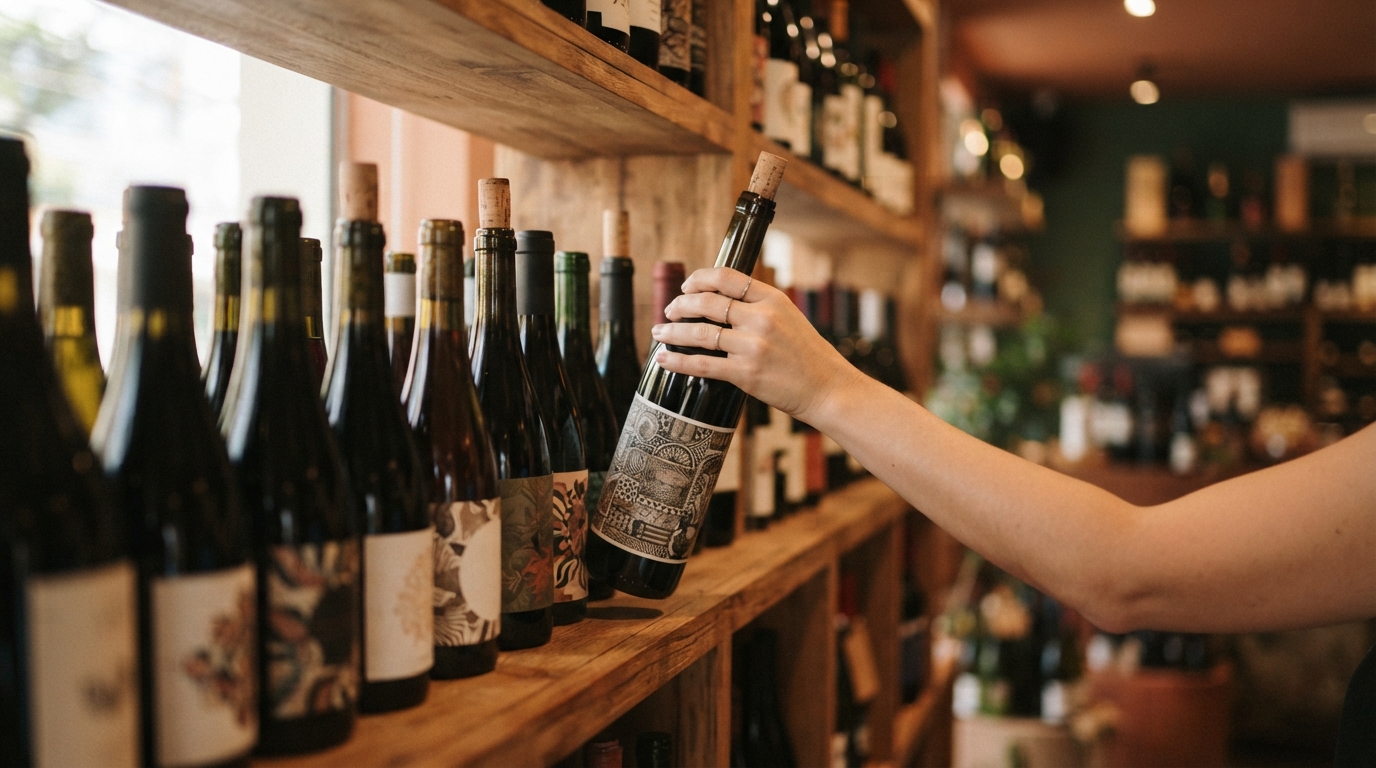
A wine and beverage store requires a clear decision on positioning. You can focus on neighborhood convenience, curated labels, ready-to-drink beverages, events, or more consultative service, but each choice changes inventory, margin, tied-up capital, and the buying routine.
It’s also a business where mistakes in the mix show up fast. Dead stock takes up cash, space, and attention; the right products move, drive repeat purchases, and keep the operation going.
- fast-moving inventory
- repeat purchases
- product mix
- margin by category
What you need to understand before moving forward
Who do you want to serve?
Define whether your store will speak to people who buy based on price, convenience, gifting, occasion, or interest in specific labels. That changes the assortment, the level of service, and how products should be displayed.
Will your mix be broad or specialized?
A very broad store ties up capital and increases the risk of slow-moving stock. A more focused store needs a clear proposition to justify the visit and the repeat purchase.
Which categories will drive turnover?
You need to separate what sells often from what is there to complement the basket. In beverages, that difference defines how much stock is worth keeping and where your money sits idle.
Will you sell only from stock or also by order?
Selling by order reduces inventory risk, but it requires a well-defined ordering process and lead time. Selling from stock demands more capital, better organization, and more precise replenishment.
What will the buying experience be like?
In wine, the purchase often depends on guidance, comparison, and trust. If service doesn’t help the customer choose, the store becomes just another stop.
The critical points of this business
Market
You need to understand which buying occasions exist around you and which categories make sense for them. A store near homes, for example, may follow a different logic from one close to restaurants, offices, or leisure areas.
Offer
The assortment needs a balance of depth and control. In wine, curation matters more than sheer volume; in fast-moving beverages, availability matters more than excessive variety.
Operations
Operations depend on receiving, storage, expiration control, and proper product separation. If you don’t organize this before opening, inventory becomes the main source of loss.
Financials
The business requires close attention to working capital, because a significant share of the money sits in inventory. You need to project how much you buy, how fast it moves, and how long it takes to turn merchandise into cash.
Location
The location has to fit the type of purchase you want to generate. Foot traffic helps, but what really matters is the match between the surrounding audience, access, visibility, and consumption habits.
Regulation
Selling beverages requires attention to operating rules, taxation, and licensing requirements. If you plan to sell alcohol during specific hours, offer delivery, or allow on-site consumption, that needs to be clear before opening.
What can compromise the business
Assortment based on personal taste
Choosing products based on the owner’s preferences usually leads to stock that doesn’t move and missing items that customers actually want. Before buying, validate which categories have demand within the audience you want to serve.
Too many labels without curation
A full shelf doesn’t mean a strong store. When the mix grows without logic, customers decide more slowly, inventory gets expensive, and replenishment becomes harder.
Initial purchase larger than turnover capacity
In beverages, slow-moving stock hurts cash flow and reduces space for replenishing the items that sell. The risk grows when the entrepreneur confuses variety with safety.
A location that doesn’t match buying habits
A spot can have traffic and still fail for this business if people don’t buy beverages often in that area. It’s worth looking at where people already buy, on what occasion, and with what level of urgency.
Service without guidance
With wine, customers often need help choosing between price, style, occasion, and basic food pairing. If the team can’t guide that process, the store loses conversion and repeat business.
Turn these questions into decisions
In this kind of business, the plan doesn’t start with inventory. It starts with the decisions that define what you sell, who you sell to, and how much capital needs to stay tied up before merchandise turns into cash. Vibz organizes that analysis so you can structure the business before buying the first batch.
Business Scope
It helps you turn the store idea into a clear thesis: what problem it solves, which audience it serves, what value proposition supports the assortment, and which assumptions need to be tested before opening.
Market Intelligence
It helps structure your read of the area, buying behavior, and local competition, so you can decide whether the store will compete on convenience, curation, price, or occasion.
Operational Plan
It organizes how the store will actually run, from receiving to storage, including mix, team, suppliers, and sales channels, before you take on fixed costs.
Financial Modeling
It turns your choices around mix, location, and operations into numbers for investment, inventory, expenses, and cash flow, so you can test whether the model works before committing capital.
Before investing, you should know
- What audience range will you serve, and what buying occasion does it represent?
- Which categories need to be always available, and which can be brought in only on demand?
- How much starting inventory do you need to open without running short or tying up too much capital?
- Which part of the mix will move fast enough to support the operation?
- What kind of service do you need to offer to sell wine consistently?
- Does the chosen location fit convenience buying, repeat visits, or curated selection?
- Which licenses and legal requirements need to be in place before the first sale?
Sua ideia merece mais do que um palpite. Estruture o negócio, teste suas premissas e entenda se ele faz sentido antes de comprometer tempo e dinheiro.
Planejar meu negócio no Vibz