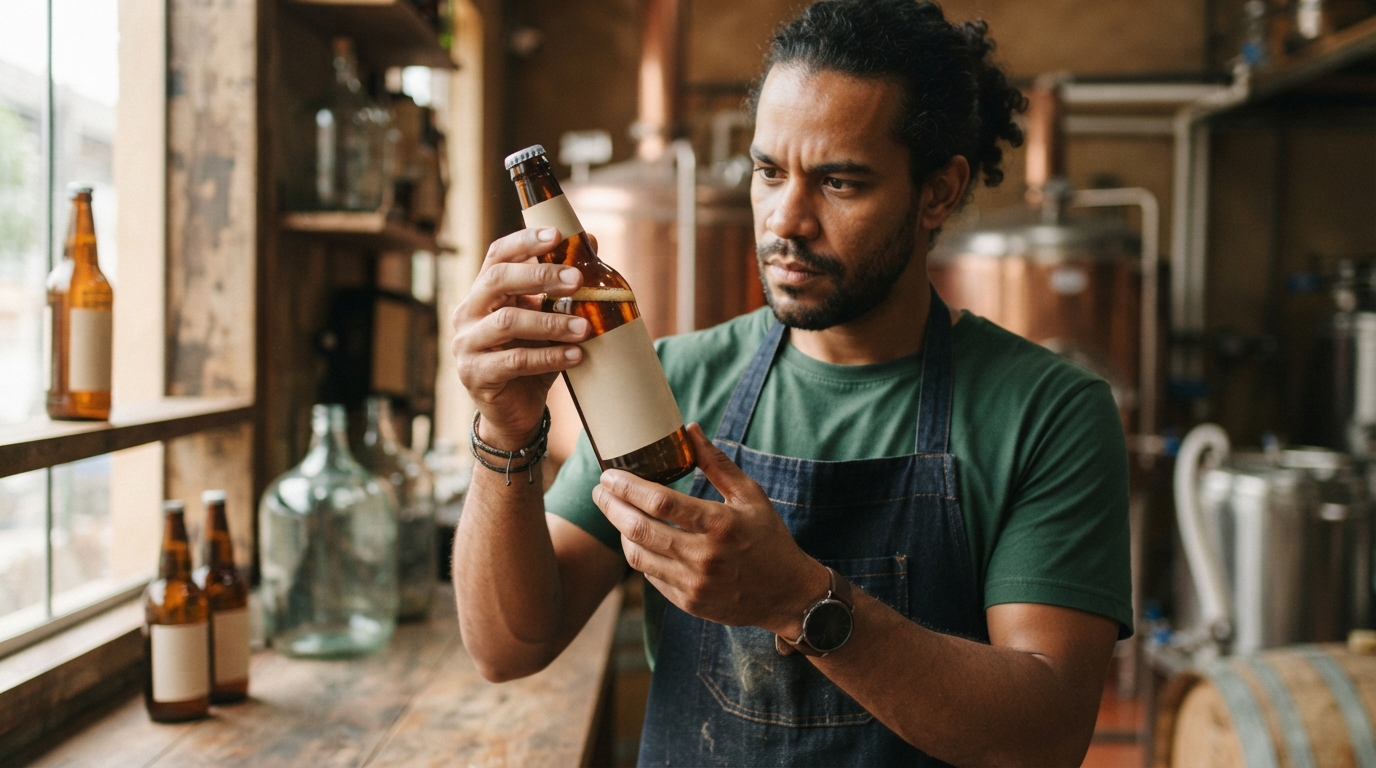
A craft brewery takes more than liking beer and knowing the styles. You need to decide whether you will sell on-site, distribute to retailers, brew for other brands, or combine channels, because each model changes the structure, the cash turnover, and the pace of the operation.
What sets this business apart from many others is the mix of production lead time, sensitive inventory, and standard requirements. A recipe may work well in a small batch and fall apart when volume increases, so planning has to start before you buy the equipment.
- batch production
- inventory with maturation
- quality control
- channel-based sales
What you need to understand before moving forward
Which sales model makes sense?
You need to decide whether the brewery will depend more on direct sales, distribution, or contract brewing. Each path requires a different structure for margin, volume, and commercial relationships, and that changes the size of the initial investment and the time it takes to break even.
Is the recipe stable at scale?
A beer that performs well in testing does not always keep the same flavor, aroma, and repeatability when the batch gets larger. Before investing, you need to validate whether the process can handle minimal variation between brews, because consistency is part of the product here.
Which styles belong in the initial lineup?
The catalog should not start too broad. You need to choose styles that make sense for your audience, your production capacity, and your ingredient control, because too much variety increases complexity and ties up inventory.
How long is the money tied up?
Beer may require fermentation, conditioning, packaging, and distribution before it turns into cash. You need to map that cycle to know how much working capital will be necessary between brewing and getting paid, especially if you sell through channels with longer terms.
Who will buy again and again?
It is not enough to identify the curious or occasional buyer. What sustains the brewery is repeat purchasing, whether from bars, specialty shops, restaurants, or end consumers, and that needs to be validated with a clear buying and repeat-buying profile.
Which regulatory requirements affect the operation?
Producing alcoholic beverages involves health, tax, and labeling requirements that need to be addressed before opening. If you ignore that, you risk building an operation around a model that cannot actually run as planned.
The critical points of this business
Market
You need to understand which styles are accepted by the audience you want to serve and how that audience buys. In craft brewing, style preference, consumption frequency, and purchase channel matter more than a generic idea of 'liking beer'.
Offer
The offer needs to start with focus. Define whether the brewery will be known for a core lineup, seasonal releases, collabs, or made-to-order production, because each choice changes production predictability and how you build brand and repeat purchases.
Operations
Operations depend on a clean, repeatable process that fits batch production. You need to validate brewing capacity, fermentation, conditioning, packaging, cleaning, and loss control before thinking about expanding the catalog.
Financials
The investment is not only in equipment. Between ingredients, packaging, facility adjustments, licenses, working capital, and inventory tied up during the process, the cash position needs to support more than one stage before sales become actual inflow.
Regulation
Craft beer is not a business where regulatory compliance can wait. You need to confirm requirements for production, storage, labeling, transport, and sales, because each channel may impose different conditions.
Channels
The way you sell determines the structure of the business. Direct sales, bars, specialty shops, events, and distribution call for different margins, volumes, and commercial routines, and that needs to be clear before you build production capacity.
What can compromise the business
A catalog larger than production can handle
Starting with too many different beers usually increases purchasing, losses, and the difficulty of keeping a consistent standard. Check whether your structure can produce, store, and sell each label consistently before expanding the portfolio.
Dependence on occasional sales
If the brewery lives only on events, launches, or sporadic purchases, predictability drops sharply. The risk goes down when you identify channels with repeat buying and build a commercial routine that supports production.
Underestimating the cash cycle
Production may require cash out before revenue comes in, and that puts pressure on working capital. If you do not map conditioning time, collection terms, and inventory turnover, the operation can feel strained even with good sales.
Ignoring recipe repeatability
A beer that is well received in one batch can lose its standard in the next if the process is not tightly controlled. That affects trust, repeat purchases, and relationships with channels that depend on consistency.
Entering without validating legal requirements
Health, tax, and labeling adjustments can completely change the opening plan. If you leave that for later, you risk buying infrastructure that does not fit the type of operation you want to run.
Turn these questions into decisions
Before investing, you need to turn a love of beer into business decisions. That is where Vibz helps, because the analysis stays tied to the model, the market, the operation, and the numbers you gather.
Business Scope
Use this stage to turn the brewery idea into a testable thesis: what problem you solve, for whom, with what offer, and through which sales model. It helps separate the desire to start a business from an operation that can be tested before you commit capital.
Market Intelligence
Here you structure the analysis of the audience, the channels, and the environment the brewery will enter. It is the right stage to organize what you need to learn about styles, buying frequency, competition, and the customer profile that comes back.
Operational Plan
This stage helps you design how the brewery will work in practice, from batch to packaging, including suppliers, structure, team, and channels. It is decisive for validating whether the initial catalog fits the operation you can actually run.
Financial Modeling
Use this stage to turn your decisions into investment, costs, working capital, and projected cash flow. In craft brewing, that is what shows how long it takes for production to turn into cash and which structure fits your plan.
Before investing, you should know
- How many liters per batch do you need to produce to serve the channel you chose?
- How long will it take between buying ingredients and getting paid for the sale?
- How many different styles fit your initial operation without losing consistency?
- Which health, tax, and labeling adjustments does your model require?
- How much working capital do you need to sustain conditioning, inventory, and collections?
- Who buys on a recurring basis, and how often does that customer come back?
- Will you sell direct, distribute, or brew for other brands at the start?
Sua ideia merece mais do que um palpite. Estruture o negócio, teste suas premissas e entenda se ele faz sentido antes de comprometer tempo e dinheiro.
Planejar meu negócio no Vibz