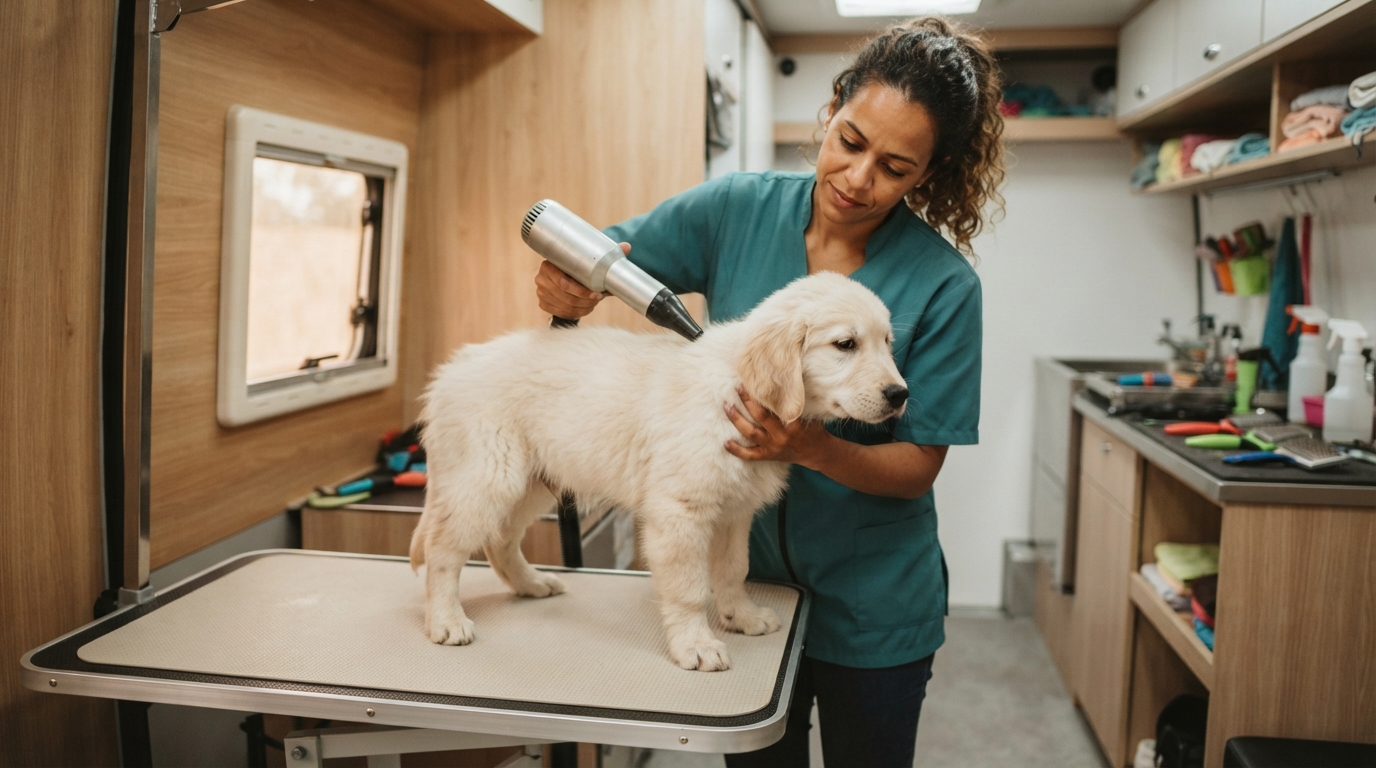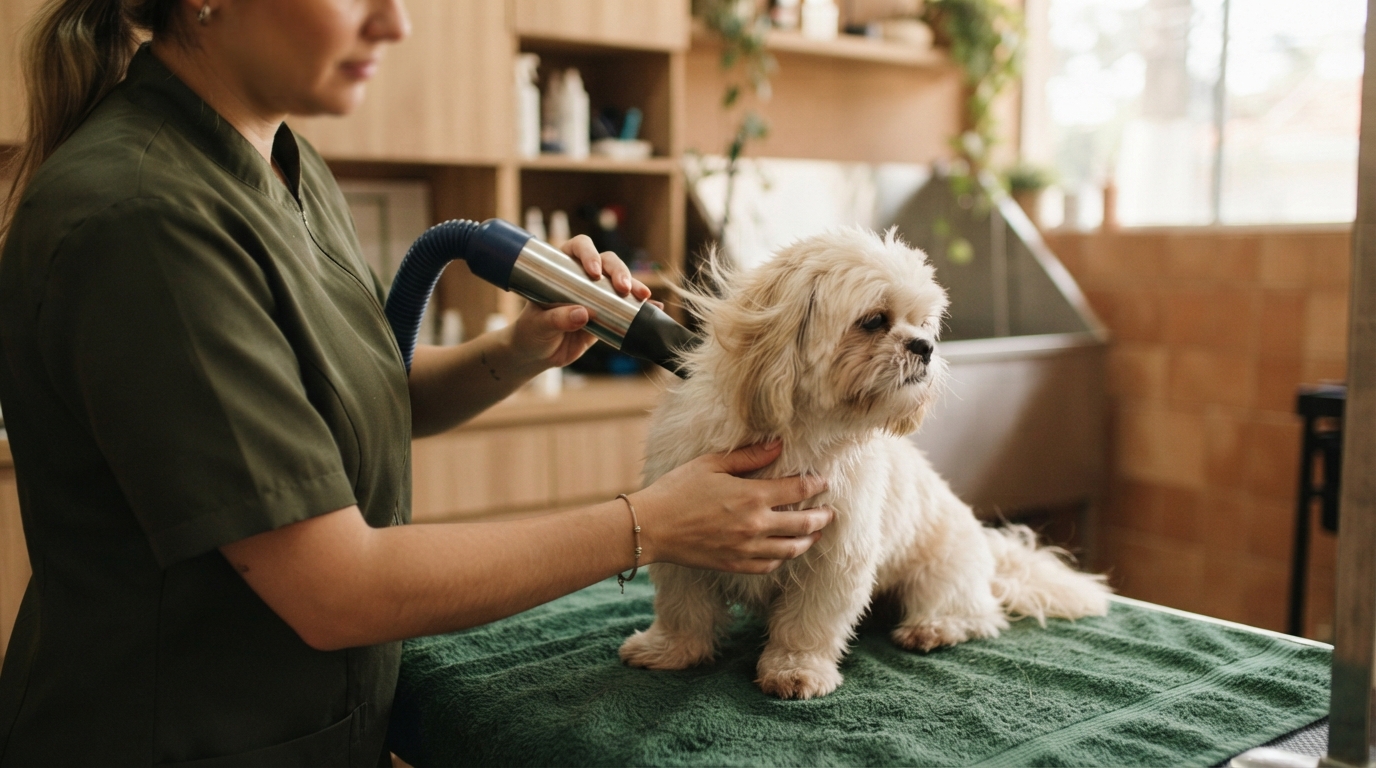
This business works differently from a fixed pet shop because the operation runs along the route you build. What determines whether it makes sense is not only your grooming skill, but the balance between travel, productivity per appointment, and service quality at the client’s address.
You need to think about scheduling, travel time, water and power use when you rely on the client’s space, plus restraint, cleaning, and transport items. In a client’s home, any lack of organization shows up fast: delays, mess, a stressed animal, or an incomplete service.
- appointment-based service
- travel between neighborhoods
- hygiene and restraint
- service at the client’s address
What you need to understand before moving forward
What kind of client will you serve?
You need to decide whether you’ll work with small dogs, medium-sized animals, cats, or a narrower segment. That changes service time, equipment, operational risk, and even how you build the schedule.
What service radius makes sense?
Define which neighborhoods or areas you can cover without losing too much time on the road. If the route is too wide, the time cost per visit rises and the schedule becomes hard to fit together.
Will you offer basic bathing, bathing and grooming, or packages?
You need to define the real scope of the offer before you promote it. Each combination requires a different routine, different equipment, and different time, and adding more than the operation can handle usually hurts delivery.
How will scheduling work?
Decide whether you’ll work with fixed time windows, route order, or individual appointments. In a mobile service, the way you book times directly affects punctuality and how many appointments you can handle in a day.
What minimum setup do you need to bring?
List what goes in the vehicle or service cart: bathing items, drying equipment, restraint tools, cleaning supplies, and protection gear. If something is missing during the visit, you lose time, create rework, and weaken the customer experience.
The critical points of this business
Market
You need to understand whether the area has enough pet owners, how often they use the service, and whether their buying profile fits home service. It also helps to see whether local clients value convenience more than price.
Operations
The operation has to fit short travel times, standardized service, and cleaning between visits. What matters here is being able to repeat the service with quality in different environments, without relying on improvisation.
Location
In this model, location is not a storefront, it’s a route. You need to design the service area to reduce time stuck in traffic and avoid trips that consume the day without producing enough work.
Financials
The key number is how much each visit needs to generate after subtracting travel, supplies, equipment maintenance, and unproductive time between appointments. Without that, you can sell a lot and still fail to build margin.
People
If you start alone, you need to know your physical and operational limits. If you have an assistant, handling, hygiene, and service standards need training so they don’t vary from one visit to the next.
Regulation
You should check municipal requirements, rules for transporting equipment, waste disposal, and any animal welfare obligations. In home service, compliance depends both on what you do and on how you enter and leave the client’s property.
What can compromise the business
A schedule spread too thin
When appointments are too far apart, the day loses efficiency and travel costs weigh more than they should. To avoid that, you need to map routes and group clients by area before accepting new time slots.
Selling the service without a clear scope
Promising bathing, grooming, detangling, and extra care without setting limits creates delays and frustration. The client needs to know exactly what’s included, what depends on the animal, and what requires extra time.
Insufficient setup for external service
If your work kit doesn’t cover restraint, drying, cleaning, and protection, you’ll depend on the client’s home to solve operational problems. That increases rework, discomfort for the animal, and loss of consistency.
Pricing without accounting for unproductive time
Charging based only on the bathing and grooming itself, without including travel and waiting time, distorts the result. Pricing needs to reflect the full visit time, not just the moment you’re doing the service.
Serving animals without proper screening
Accepting any case without asking about behavior, size, coat condition, and handling history can make the visit longer and riskier. A simple pre-booking screening reduces surprises and helps you decide whether the appointment fits your routine.
Turn these questions into decisions
In this business, the difference between a good idea and a weak operation is how well you organize route, scope, capacity, and numbers before you start serving clients. Vibz helps you structure those decisions based on what you learn about your market and your operation.
Business Scope
Use this step to turn the idea into a clear thesis: which animals you serve, which services are included, what problem you solve, and which assumptions need to be validated before you invest.
Market Intelligence
Here you organize your analysis of the area, customer profile, competition, and entry strategy. That helps you decide where to operate, who to sell to, and which signals to watch before expanding the service area.
Operational Plan
This step is for mapping the service in practice: schedule, route, work kit, hygiene standards, suppliers, and the routine between visits. It’s where you reduce improvisation before the first purchase.
Financial Modeling
Use this step to turn travel, service time, supplies, and expenses into a projection. This is where you test whether pricing and visit volume can support the business without guessing.
Before investing, you should know
- How many appointments per day can you handle without hurting travel time or quality?
- Which area will you serve in the first few months?
- What is the average time of each visit, from start to finish?
- Which services exactly are included in your initial offer?
- What items need to be in your kit so you can work without depending on the client’s home?
- How much does each appointment need to generate after factoring in travel and supplies?
Sua ideia merece mais do que um palpite. Estruture o negócio, teste suas premissas e entenda se ele faz sentido antes de comprometer tempo e dinheiro.
Planejar meu negócio no Vibz