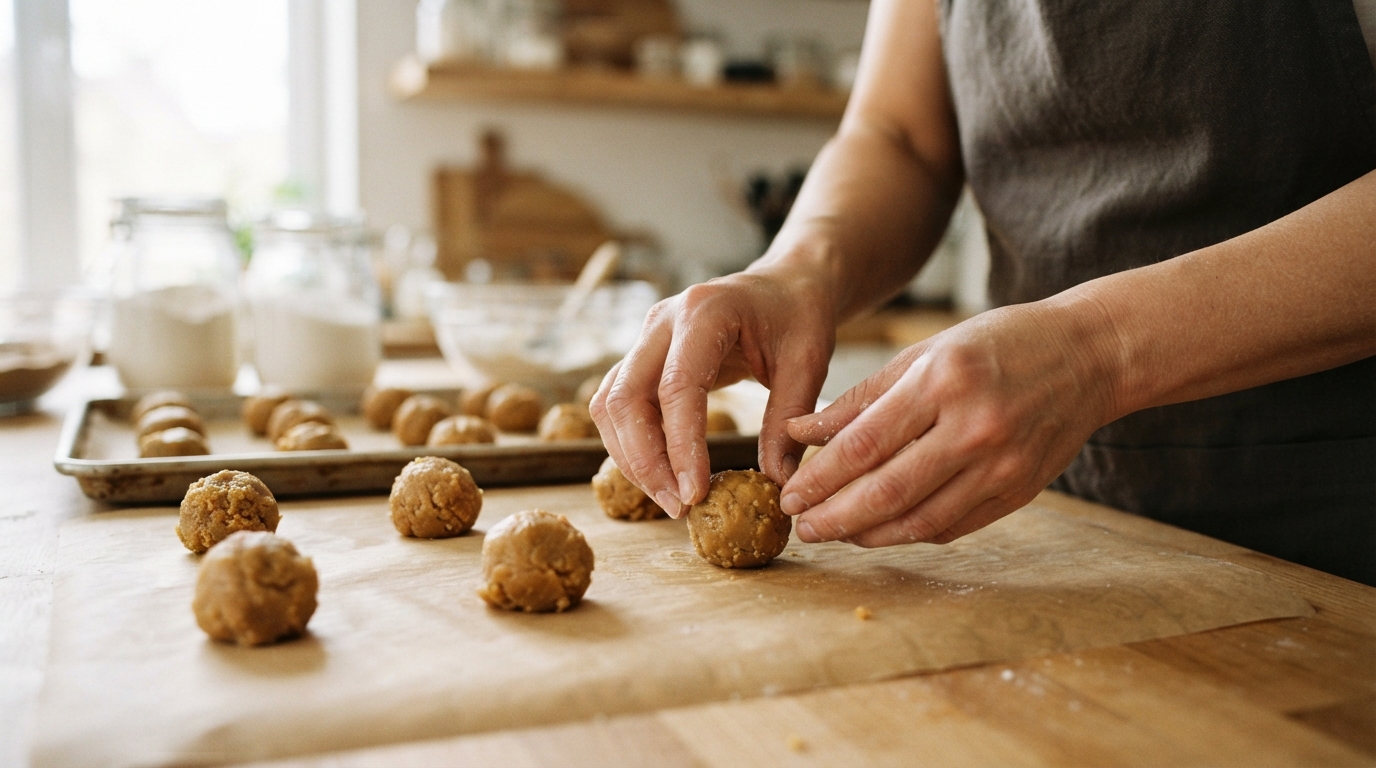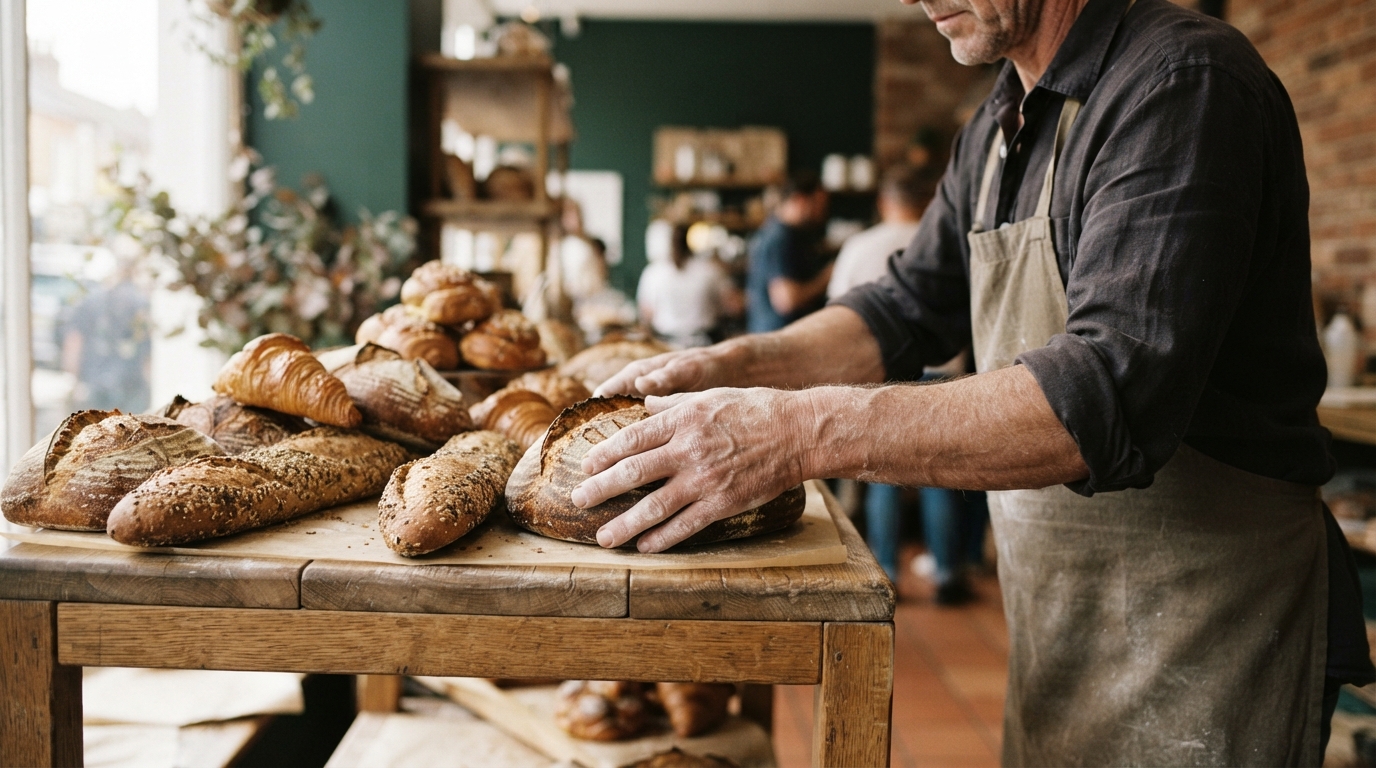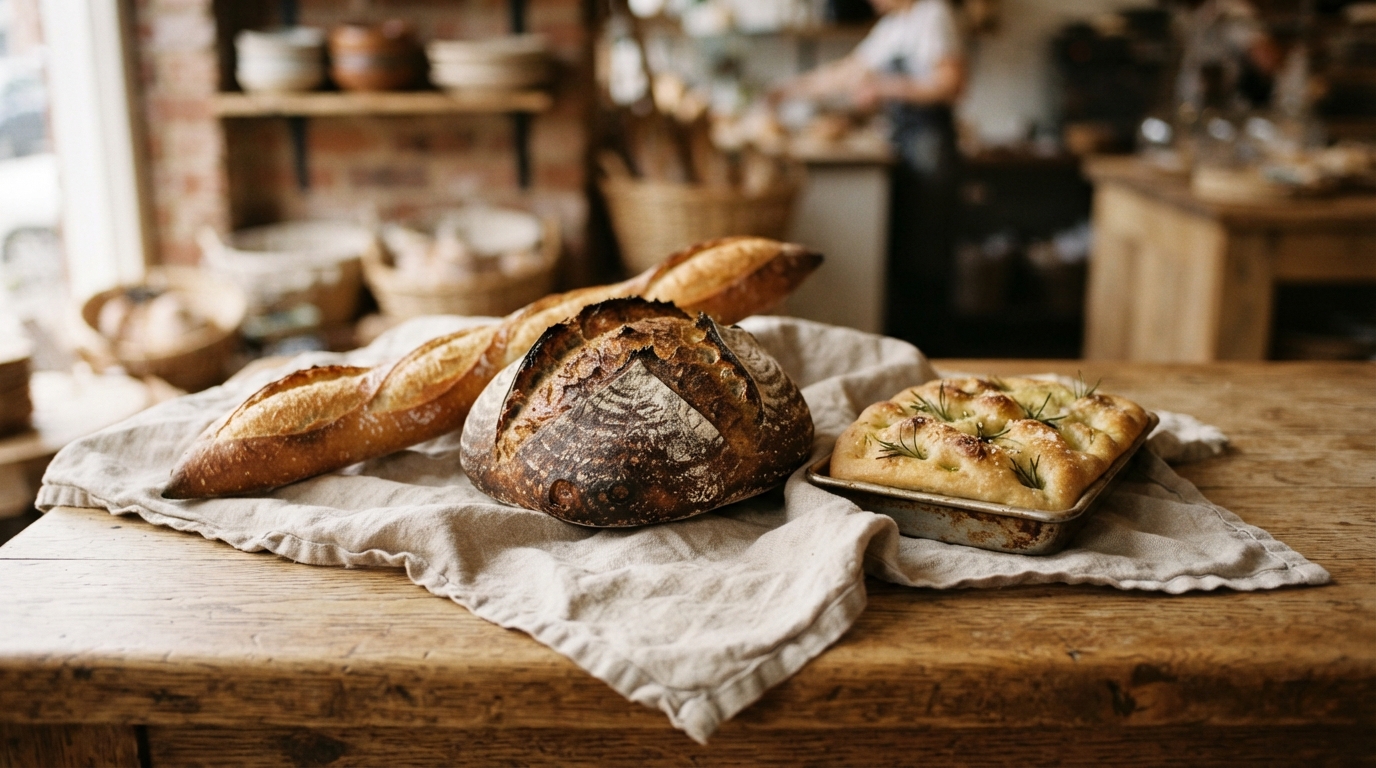
An artisanal bakery takes more than a good recipe. You need to decide whether you will work with in-house production, a lean display, and fast turnover, or whether you will try to expand the mix and take on an operation that is harder to control.
This kind of business depends on predictable production, a balance between variety and waste, and a location that makes sense for repeat purchases. What defines viability is not only the appeal of the bread, but the relationship between sales volume, production capacity, and margin per item.
- daily production
- perishable products
- repeat purchases
- fast-turnover display
What you need to understand before moving forward
Will you produce everything on-site?
If production happens at the location itself, you need to validate space, equipment, prep routine, and ventilation. If part of the offer comes ready-made or semi-finished, the decision changes quality control, ingredient costs, and the perception of craftsmanship.
What mix fits your operation?
Bread, viennoiserie, cakes, savory items, and coffee do not require the same structure. The more items you include, the greater the chance of losing consistency, increasing waste, and bottlenecking production at peak hours.
Is demand driven by foot traffic or destination visits?
An artisanal bakery can sell to people who walk past the store or to people who go there for a specific product. That difference changes the choice of location, opening hours, assortment, and the weight of local communication.
Can you sell what you produce on the same day?
Artisanal bakery products have a short selling window. You need to know which items move early, which can be bundled, and which become leftovers, because that defines both production planning and real margin.
Does the average ticket support the operation?
The value of each purchase needs to be compatible with the cost of keeping the oven running, the team staffed, ingredients stocked, and losses covered. If customers come in for only one low-priced item, you need volume, repeat business, or add-on sales to make the numbers work.
The critical points of this business
Market
You need to understand who buys artisanal bread in your area, how often, and for what reason. It is not enough to know whether there is traffic; what matters is whether there is a buying habit, a search for quality, convenience, or a specific product.
Offer
The offer needs a clear logic. An artisanal bakery cannot handle an overly broad mix without losing consistency, so you need to define what will be made every day, what will be made to order, and what will only appear on specific dates.
Operations
Operations start early, depend on sequence, and leave little room for improvisation. You need to validate bake cycles, team capacity, cooling time, display, and restocking, because any delay affects the whole day.
Financials
The critical point here is turning production into real margin. You need to map ingredient costs, losses, packaging, labor, energy, and rent, and also estimate how much of production becomes actual sales and how much is left over.
Location
The location needs to match the kind of purchase you want to generate. For an artisanal bakery, proximity to homes, morning traffic, and easy stopping tend to matter more than a nice address or low rent in isolation.
Regulation
Food production requires attention to licensing, handling, hygiene, storage, and health regulations. Before investing, you need to know what will be required to produce, display, and sell without getting stuck later during opening.
What can compromise the business
A larger mix than the operation can handle
When the display tries to look too complete, production loses rhythm and leftovers increase. The issue is not variety itself, but the inability to produce consistently and sell everything within the useful window.
Choosing the location based only on rent
A lower rent can become expensive if the address does not generate repeat purchases or does not match peak selling hours. Before signing, check whether the traffic pattern and neighborhood profile fit bakery consumption.
Underestimating losses and internal write-offs
In an artisanal bakery, leftovers are not a minor detail. If you do not measure what comes back from the display, what expires, and what goes out as a giveaway or discount, the calculated margin will look better than the real one.
Production without a defined routine
Without a clear prep sequence, each day becomes a different operation. That increases mistakes, rework, and dependence on specific people, which is not good for a business that needs to open early and repeat a standard.
Pricing without reading buying behavior
If you price only by ingredient cost, you may ignore the role of average ticket and add-on sales. In an artisanal bakery, pricing needs to align with purchase frequency, perceived value, and turnover capacity.
Turn these questions into decisions
An artisanal bakery is not decided by the bread recipe alone. It is decided by the fit between local demand, production routine, losses, and the ability to turn all of that into numbers before signing the lease or buying equipment.
Business Scope
It helps you organize the bakery idea into a clear thesis: audience, value proposition, initial mix, and critical bets. That is useful for separating what will be daily product, what will be made to order, and what does not fit the operation.
Market Intelligence
It helps structure the analysis of the surrounding area, buying profile, and the competition already fighting for breakfast, fresh bread, and convenience. This is where you compare what the neighborhood buys with what your bakery plans to sell.
Operational Plan
It helps you design how the bakery will actually run before hiring staff or buying everything at once. That includes production, display, suppliers, sales channels, and the opening routine.
Financial Modeling
It turns those decisions into investment, costs, expenses, working capital, and projected cash flow. For an artisanal bakery, this is what shows the real weight of losses, staff, energy, and the sales volume required.
Before investing, you should know
- How many items can you produce consistently every day without exceeding the team’s capacity?
- What part of production needs to be ready in the morning so it does not lose value over the course of the day?
- How much of your mix will depend on impulse purchases and how much on repeat customers?
- Which equipment is truly necessary to start, and which can wait?
- What minimum daily sales volume do you need to cover rent, ingredients, energy, and labor?
- What kind of location encourages frequent purchases at the time your production is ready?
Sua ideia merece mais do que um palpite. Estruture o negócio, teste suas premissas e entenda se ele faz sentido antes de comprometer tempo e dinheiro.
Planejar meu negócio no Vibz