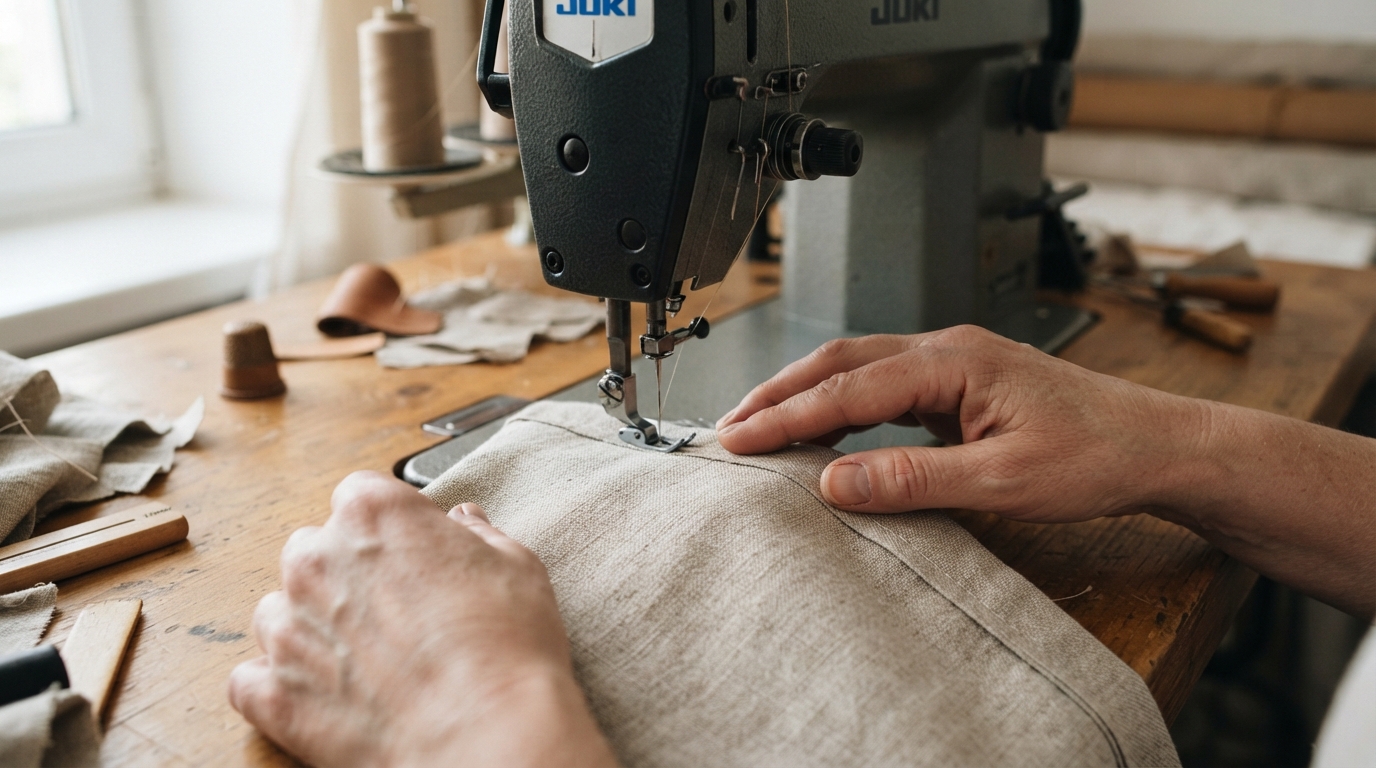
A sewing workshop for brands works well when you can turn irregular demand into predictable production. The business depends on knowing which pieces you can deliver consistently, what kind of brand values your service, and how far your structure can grow without losing standards.
What sets this business apart from making your own collection is that you are not selling products, you are selling production capacity with control. That changes everything: the contract, cash flow, sample approval routine, the need for low rework, and the way you calculate cost per piece.
- made-to-order production
- model-based standards
- delivery lead time
- quality control
What you need to understand before moving forward
What type of piece will you produce?
You need to define whether the workshop will handle T-shirts, lingerie, activewear, denim, uniforms, or another specific line. Each category requires different machines, finishing, labor, and production time, and mixing everything from the start usually increases mistakes and rework.
Does your client buy recurring volume or one-off orders?
It is worth understanding whether the brand repeats orders often or only hires you for a specific collection. That pattern changes operational predictability, raw material purchasing, and the way you organize your team and schedule.
Will you work with cutting, sewing, or the full package?
This decision defines the size of the structure and the level of responsibility you take on. The more stages you include, the greater the need for control over raw materials, layout, waste, checks, and final deadline.
What quality standards will the client require?
You need to know how the brand approves samples, what tolerances it accepts, and which defects are unacceptable. In a workshop, a piece outside the standard can lead to returns, discounts, or losing the client, so this needs to be clear before production starts.
Does your monthly capacity match the expected demand?
It is not enough to know how many people you have on the team. You need to estimate how many pieces each station can deliver at the required finishing level and compare that with the demand you want to take on without missing deadlines.
Can you buy supplies without choking cash flow?
Depending on the contract, you may need to pay for fabric, trims, packaging, or labor before receiving payment. Without working capital control, the operation grows on paper and gets tight in practice.
The critical points of this business
Offer
The workshop needs to define exactly what it delivers: finished pieces, outsourced sewing, cutting and sewing, or separate stages. That clarity prevents overpromising beyond your structure and helps you choose clients that fit what you do well.
Operations
The workflow needs to be designed by stage, with material intake, checks, production, review, and shipping. In a workshop, the time lost between stages often weighs as much as the sewing itself.
Quality
You need to define how you will measure stitching standards, finishing, measurements, and consistency across batches. Brand clients usually notice variation between pieces, so quality control needs to be built into the routine, not just checked at the end.
Financial
The model needs to separate labor, machines, maintenance, waste, energy, supplies, and payment terms. If you do not know what it costs to produce each piece with room for rework, the price may look good and still generate losses.
People
Productivity depends on seamstresses, inspectors, cutters, and support staff who understand piece standards and production sequence. High turnover or weak training affects deadlines and quality in ways that are hard to fix later.
Channels
You need to decide how you will reach the right brands: direct relationships, referrals, active prospecting, or partnerships with people already serving the sector. Not every brand needs a workshop, and your communication needs to show confidence in production, deadlines, and consistency.
What can compromise the business
Accepting every type of piece at the beginning
When the workshop tries to handle very different lines at the same time, the operation loses standards and rework increases. The best approach is to start with a clear product focus and expand only after you master the flow.
Setting prices without measuring production time
If you calculate price based on perceived effort instead of the real time of each stage, the price can end up below cost. In a workshop, a small difference per piece becomes a big problem as volume grows.
Depending on a single client
If most of your revenue comes from one brand, any collection delay, supplier change, or drop in orders affects the whole operation. It is better to build a more balanced client base, even if it takes longer.
Promising deadlines without operational slack
Tight deadlines may look like a commercial advantage, but in a workshop they usually turn into delays, pressure on the team, and lower quality. You need to know how long each stage really takes before committing to a delivery date.
Buying machines before validating demand
Idle equipment is expensive and takes up space. Before expanding your structure, it is worth confirming that there is enough volume and that the type of piece truly justifies that machine in the operation.
Turn these questions into decisions
Understanding the market and turning that into a plan changes the quality of the decision before you invest in structure, machines, and people. In Vibz, you organize this analysis around what needs to be validated to open the workshop with more clarity.
Business Scope
It helps you define the workshop thesis: what type of piece you will handle, what problem it solves for the brand, and which assumptions need to be right for the business to work.
Market Intelligence
It helps you compare brand profiles, understand the type of demand that makes sense to pursue, and structure your reading of the environment before you start prospecting clients.
Operational Plan
It helps you design the workshop flow, from material intake to shipping, including processes, team, suppliers, and service channels.
Financial Modeling
It helps you turn your operation into numbers, so you can test investment, costs, working capital, and viability scenarios before committing capital.
Before investing, you should know
- What types of pieces can you produce with consistent standards today?
- How many pieces per day does your structure deliver without increasing rework?
- Which stage will you take on at the start: cutting, sewing, or the full package?
- How long does each model take from material intake to shipping?
- What is the maximum deadline you can meet safely?
- How much working capital do you need to buy supplies and cover operations before payment comes in?
- Which brands can you serve with the structure you already have, or can build without taking on too much risk?
Sua ideia merece mais do que um palpite. Estruture o negócio, teste suas premissas e entenda se ele faz sentido antes de comprometer tempo e dinheiro.
Planejar meu negócio no Vibz