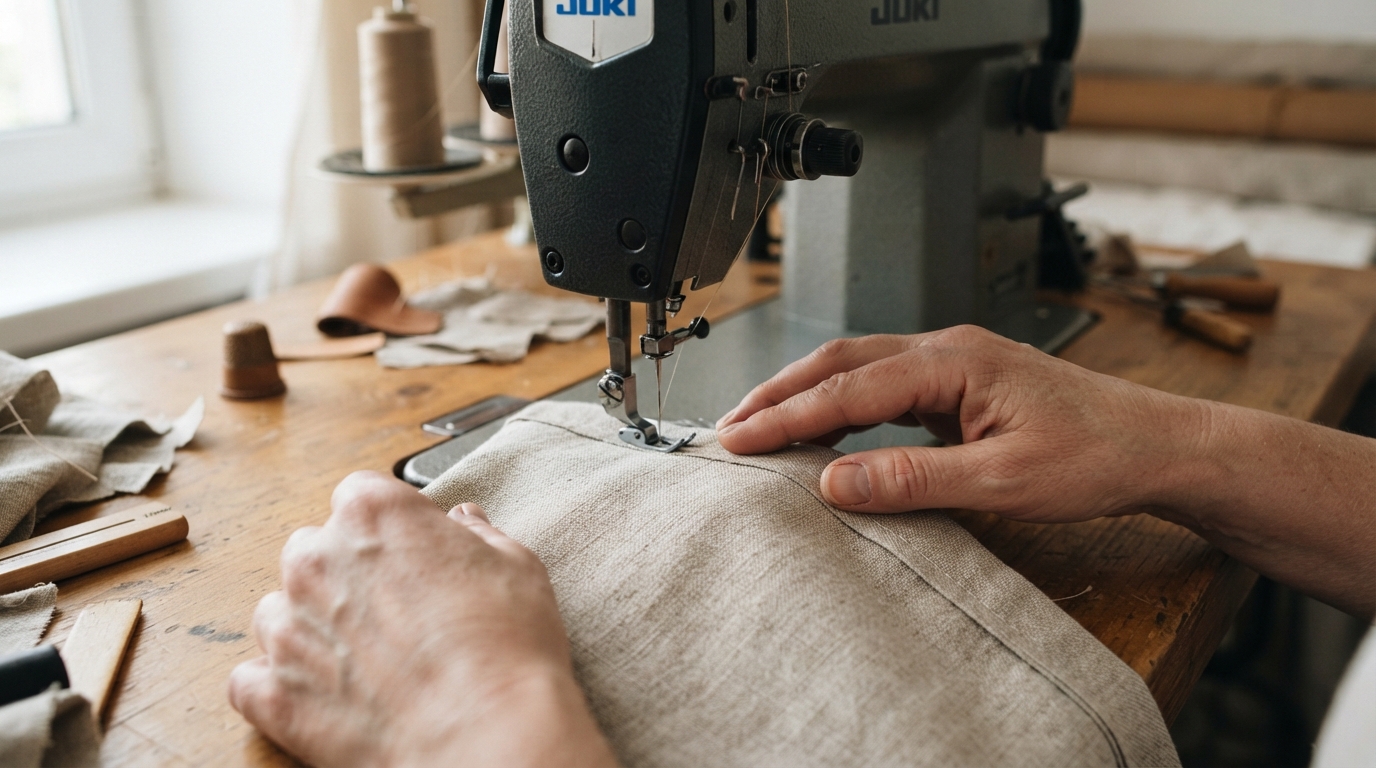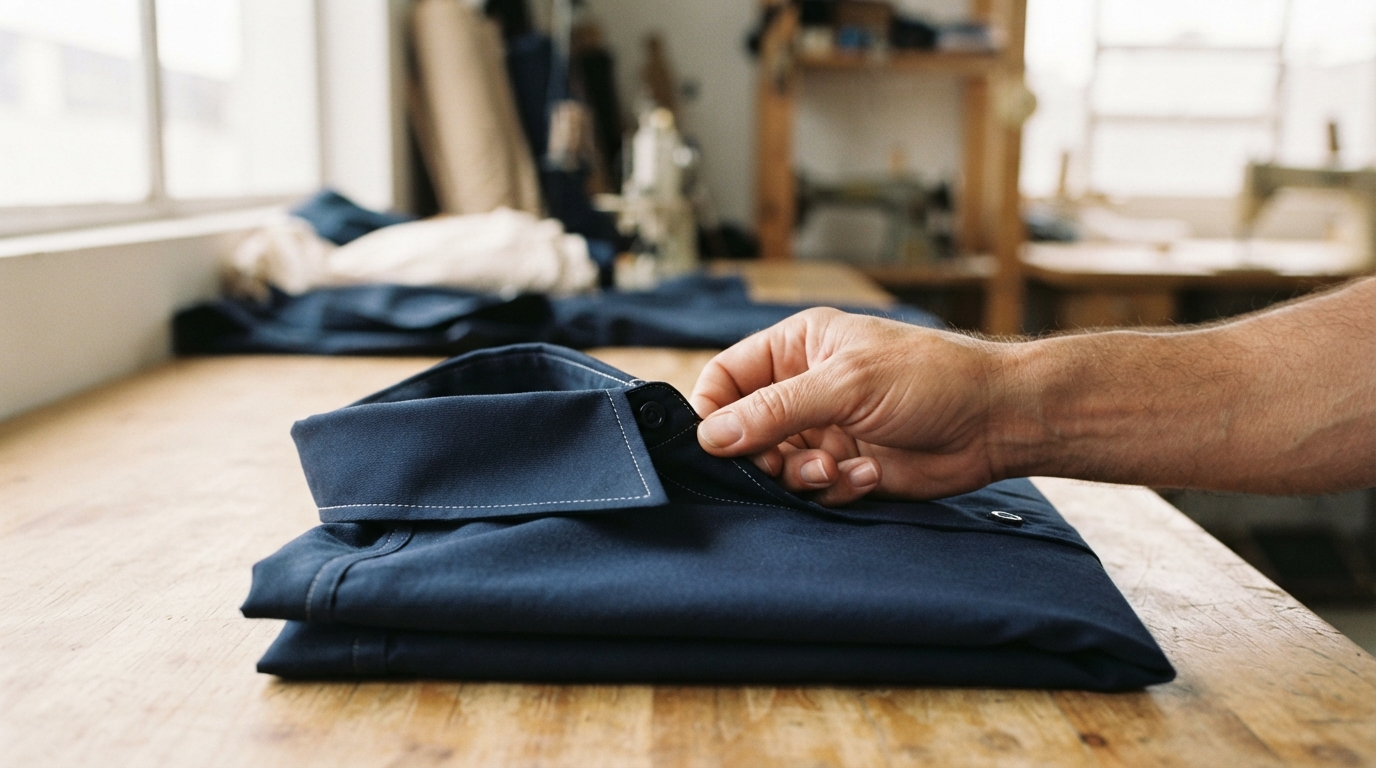
A uniform manufacturing business depends on orders that tend to come back, but are almost never identical. Schools, companies, clinics, restaurants, and factories all ask for pieces with different patterns, fabrics, customization, and deadlines, so you need to know where you want to compete before buying machines, hiring a team, or closing your first supplier.
If you misread the market, the operation gets stuck between rework, dead stock, and tight margins. If you get it right, the business becomes more predictable because uniforms are not impulse buys; they are planned purchases, tied to class changes, new hires, team growth, or internal standardization.
- repeat orders
- garment customization
- batch production
- lead time control
What you need to understand before moving forward
Who buys repeatedly?
You need to identify which customers have periodic replacements, wear-and-tear replenishment, or an ongoing need for standardization. That changes everything: it tells you whether you should sell to schools, companies, healthcare, food service, or industry, and whether demand comes from contracts, referrals, or one-off orders.
Which uniform line will you serve?
School, corporate, operational, and professional uniforms all have different fabric, finishing, and customization requirements. Choosing one line helps you design production, inventory, and communication without trying to serve everything at once.
Will you produce, outsource, or do both?
This business requires a clear decision about what will be done in-house and what will be bought ready-made or outsourced. That choice changes your control over lead time, quality, and margin, and also defines the kind of machine, team, and supplier you need.
Which pieces require strict standardization?
In uniforms, even a small variation in color, size, or application can lead to returns and rework. You need to know which items allow more flexibility and which depend on technical sheets, fitting samples, and batch-by-batch inspection.
How does the customer make the buying decision?
Some buy on price, others on speed, others on durability or how well the product fits the brand image. Understanding that criterion helps you build the proposal, the sales argument, and the level of finishing that matches what the customer values.
The critical points of this business
Market
You need to map who buys uniforms in your region, how often they reorder, and when they switch suppliers. It also helps to understand whether you can reach the decision-maker directly or whether you’ll depend on quotes, referrals, or recurring contracts.
Offer
The offer needs to be specific. In uniform manufacturing, what sells is not just the garment, but the ability to repeat a standard, customize consistently, and serve product families the customer can buy together.
Operations
You need to design cutting, sewing, application, inspection, and shipping as controlled stages. The biggest operational risk here is promising too much variety without having the flow to keep measurements, finishing, and deadlines under control.
Financials
The business cash flow depends on order size, payment terms, batch volume, and the need to stock fabric and notions. Before opening, you need to know how much capital will sit tied up between buying materials and getting paid by the customer.
People
The quality of a uniform manufacturing business depends heavily on sewing skill, inspection, and production discipline. It’s worth validating whether you’ll have a team capable of keeping standards across repeated pieces, because a small mistake in a repeated item becomes a big problem in the batch.
Regulation
Depending on the type of uniform, the business may require attention to customer standards, safety requirements, and visual identification rules. This matters especially when you serve sectors that do not accept improvisation in fabric, color, labeling, or finishing.
What can compromise the business
Accepting any order
When the workshop tries to handle very different uniforms without criteria, production loses rhythm and material purchasing becomes disorganized. To avoid that, define from the start which segments and which pieces fit your structure.
Underestimating rework
In uniforms, mistakes in size, embroidery, color, or application usually mean remaking and delays. If you don’t have stage-by-stage and batch-by-batch inspection, the margin disappears before the order is even delivered.
Buying fabric without predictability
Poorly planned inventory ties up cash and can leave you stuck with material in a color, weight, or standard nobody will ask for later. The ideal is to buy based on product line, expected turnover, and replenishment lead time.
Promising deadlines without production capacity
Uniforms are often bought with delivery expectations tied to class start dates, onboarding, or internal events. If the sales deadline is not aligned with the real capacity for cutting, sewing, and finishing, the problem shows up fast.
Depending on just one type of customer
If the whole operation revolves around one school, one company, or one specific contract, any change in schedule or supplier can break the order flow. It’s worth building a base that does not depend on a single buying cycle.
Turn these questions into decisions
In a uniform manufacturing business, what decides whether you open is not just knowing how to sew better. It’s turning the idea into a clear thesis, understanding who buys, how the operation will work, and how much capital gets tied up between fabric, production, and payment.
Business Scope
Use this step to define whether your workshop will focus on school, corporate, operational, or mixed uniforms, and which problem you solve best in each case. It helps organize the business thesis before you think about buying machines, hiring people, or building inventory.
Market Intelligence
Here you structure the analysis of who buys uniforms, how that customer decides, who competes with you, and which entry point makes sense. It helps validate whether your offer matches recurring demand or just scattered orders.
Operational Plan
This stage is for designing production, cutting and sewing processes, suppliers, and delivery channels. It’s where you turn standards, deadlines, and replenishment needs into an operating routine.
Financial Modeling
Use this stage to test investment, working capital, production cost, payment terms, and batch-order scenarios. In uniforms, this calculation determines whether you can buy materials before getting paid and how fast the business needs to turn.
Before investing, you should know
- Which uniform segments can you serve with the same production process?
- What will be your main model: in-house production, partial outsourcing, or a hybrid?
- Which pieces require tighter control over sizing, finishing, and customization?
- How much capital do you need to buy fabric, notions, and keep production running before payment comes in?
- What minimum batch size makes your operation worthwhile?
- How will you ensure consistency across replenishment orders placed months apart?
Sua ideia merece mais do que um palpite. Estruture o negócio, teste suas premissas e entenda se ele faz sentido antes de comprometer tempo e dinheiro.
Planejar meu negócio no Vibz