This kind of business works best when you understand the customer’s buying pattern and turn a recurring need into predictable delivery. The difference from a regular store is that revenue depends less on a one-time sale and more on keeping the subscription active, so each delivery failure carries more weight than it would in an occasional purchase.
Before investing, you need to decide whether you will work with a few brands and tighter operational control, or with more variety and a more complex inventory. You also need to know how you will handle different pet sizes, variable monthly consumption, and replenishment on agreed dates.
- recurring purchase
- scheduled delivery
- varied inventory
- monthly consumption
What you need to understand before moving forward
Who subscribes on a recurring basis?
You need to identify which profiles buy predictably: dog and cat owners with stable consumption, customers who value convenience, and people willing to schedule replenishment. This changes retention, average order value, and delivery frequency.
What consumption range will you serve?
Pet food comes in very different pack sizes, and the business needs to decide whether it will focus on small, medium, or large volumes. That choice affects inventory, packaging, shipping, and the chance of picking errors.
Own delivery or outsource it?
You need to decide whether you control the last mile or hand delivery over to an external operator. In a subscription service, timing and predictability are part of the offer, so this choice affects cost, coverage, and customer experience.
How many brands and product lines make sense?
The assortment needs to be broad enough to cover preferences and restrictions, but not so broad that it slows purchasing and storage. If you push variety too far, inventory becomes a problem before it becomes an advantage.
How will customer replenishment work?
You need to define whether the subscription will run on a fixed interval, estimated consumption, or the customer’s own request. That rule determines cancellations, delays, and how much the operation can plan purchases ahead of time.
The critical points of this business
Market
You need to understand whether people in your area buy pet food often enough to support a subscription. You also need to see whether the customer values convenience, price, variety, or on-time delivery, because the offer changes with their priority.
Offer
The offer needs to make clear what is being subscribed to: brand, food type, weight, frequency, and exchange rules. In pet food, ambiguity leads to picking errors and quick dissatisfaction, because the customer notices any difference in the product.
Operations
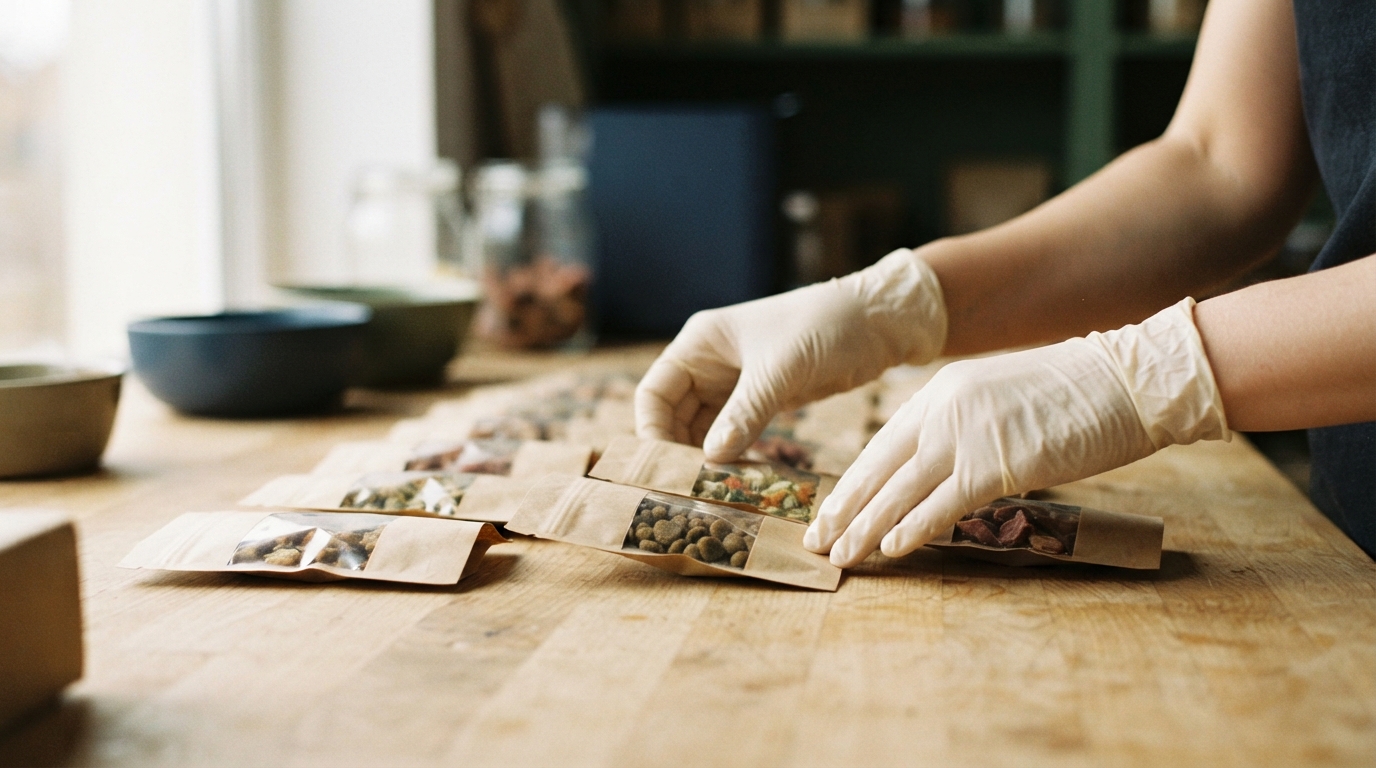
The routine needs to cover receiving, storage, picking, checking, and dispatch without mixing up similar orders. Since volumes vary by animal and by buying cycle, the operation needs simple, strict control from the start.
Financials
You need to calculate subscription margin considering product, packaging, delivery, losses, and item exchanges. Without that, recurring revenue can look healthy on paper and still fail to support the business.
Logistics
Delivery is a central part of the experience, so you need to validate routes, receiving windows, and shipping cost across different neighborhoods or cities. If deadlines fail often, retention drops even when the product is good.
Technology
You need reliable control over subscriptions, recurring billing, pauses, plan changes, and order history. If that control fails, the business loses predictability and increases the risk of sending the wrong product or sending it on the wrong day.
What can compromise the business
An assortment larger than the operation can handle
Offering too many brands, sizes, and product lines without turnover control clogs inventory and increases picking errors. Before expanding the catalog, check which items actually repeat in subscriptions.
Treating shipping as a detail
If delivery cost and timing are not part of the calculation from the start, the subscription either loses margin or loses customers. The risk grows when the operation depends on split and frequent deliveries.
Estimated consumption without validation
Assuming every customer consumes at the same pace leads to stockouts or excess inventory. You need to validate the real replenishment frequency by pet size and by food type.
Changing products without a clear rule
Without an objective policy for replacing brand, flavor, or package size, the operation turns into rework and the experience gets worse. In a subscription, the customer expects consistency, not improvisation.
Turn these questions into decisions
In this business, understanding the market and designing the operation before buying inventory makes a real difference. Vibz helps you organize those decisions in stages, so you can turn the idea into a plan that makes sense before the first shipment.
Market Intelligence
Use this stage to structure who buys on a recurring basis, which profiles value convenience, and how competitors serve this audience. It helps you answer whether the subscription has real room to grow and which offer makes the most sense.
Operational Plan
Here you design the subscription flow, picking, storage, delivery, and exchange policy. This is what organizes the operation so you can avoid item errors, delays, and excess variety.
Financial Modeling
This stage turns product and logistics choices into numbers for investment, delivery cost, margin, and working capital. It is where you test whether recurring revenue can really sustain the business before you commit money.
Deployment Cockpit
Once the plan is ready, this stage helps you organize implementation with goals, actions, and follow-up. It makes sense when you have already defined the model and want to start with control from the first orders.
Before investing, you should know
- How many customers in your area buy pet food often enough to subscribe?
- What is the real monthly consumption by pet size for the customers you will serve?
- What will be the total cost of each delivery, including packaging and travel?
- How many brands, sizes, and product lines can you manage without losing inventory control?
- Which subscription rule will reduce pauses, exchanges, and cancellations?
- How much initial stock do you need to serve the first cycles without running out?
Sua ideia merece mais do que um palpite. Estruture o negócio, teste suas premissas e entenda se ele faz sentido antes de comprometer tempo e dinheiro.
Planejar meu negócio no Vibz