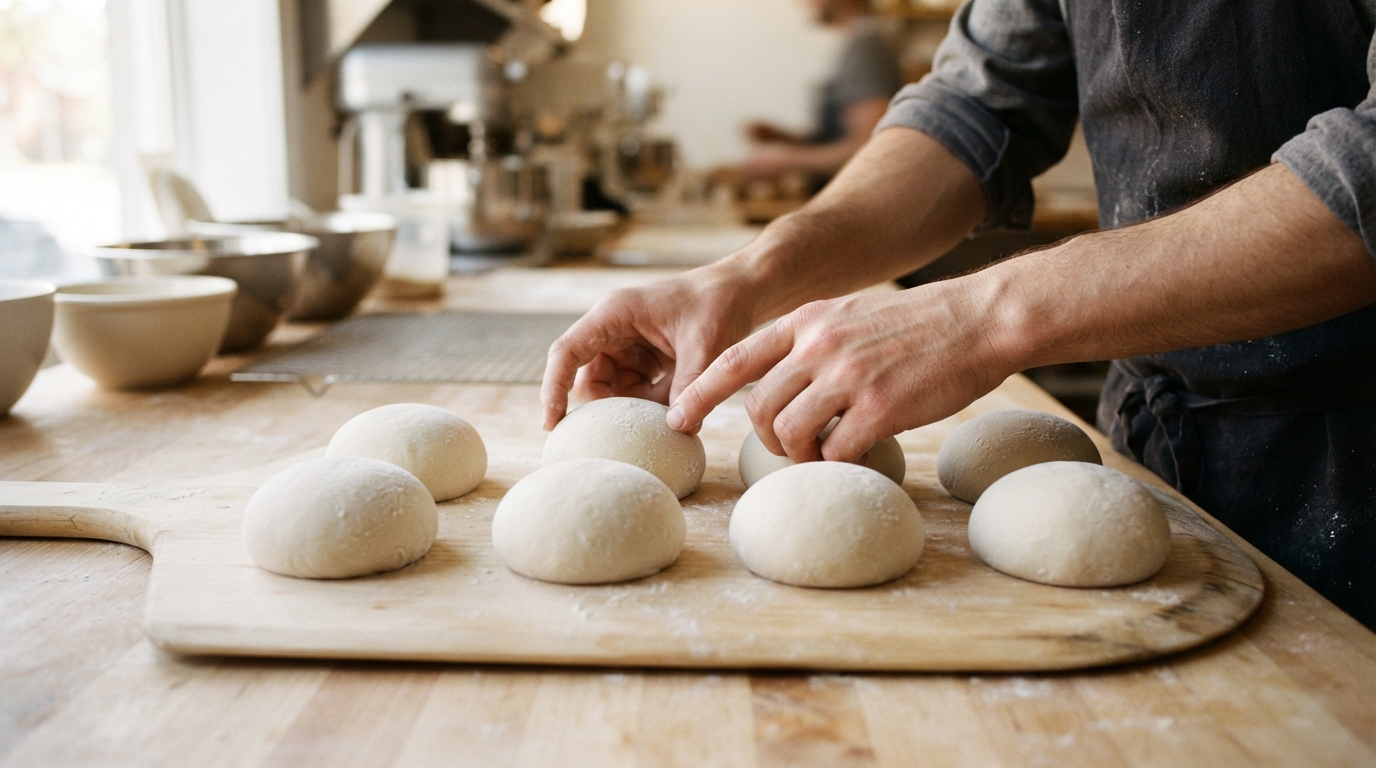
A frozen bread factory works differently from a retail bakery. You produce in batches, need consistency from one run to the next, and depend on an operation that can handle freezing, storage, and distribution without losing quality.
The key question is not just whether the bread sells. It is whether you can repeat the same product, with the same weight, volume, and baking behavior, at a scale that serves customers who buy regularly.
- batch production
- cold chain
- recipe consistency
- repeat sales
What you need to understand before moving forward
Which product will lead the mix?
You need to decide whether to start with a few high-turnover items or a broader catalog. In frozen bread, expanding the mix too early usually makes formulation, inventory, and shelf-life control harder.
Who will bake the final product?
That decision changes the operation and the commercial offer. If the end customer bakes it, you are selling convenience and consistency; if your customer is the one reselling it ready to go, the focus shifts to yield, presentation, and transport stability.
Which channel buys regularly?
You need to identify whether sales will go to bakeries, grocery stores, specialty shops, food service, or your own distribution. Each channel has different requirements for volume, lead time, packaging, and delivery frequency.
What shelf life can your formula support?
The recipe has to be tested for freezing, thawing, and baking. If the product loses texture, volume, or flavor before it reaches the customer, the operation may still produce, but it will not support repeat orders.
What level of consistency can you maintain?
In frozen baking, small variations change weight, fermentation, and the final result. You need to know whether the team, equipment, and suppliers can repeat the same standard every day.
How will the product reach the customer?
You need to decide whether you will sell it frozen in bulk, packaged by unit, or boxed for resale. That choice affects logistics cost, damage loss, and the way the customer manages inventory.
The critical points of this business
Market
The market needs to be read through the buying habits of the channel, not just through the desire to eat bread. What matters is understanding who buys frequently, in what format they are willing to receive it, and which problem the frozen product solves better than the fresh one.
Offer
The offer needs to be built around items that can handle freezing and still deliver good baking results. Not every bread works well in this model, so choosing the recipe is part of the business model, not just the menu.
Operations
Operations require control over dough, fermentation, pre-baking when applicable, rapid freezing, packaging, and storage. If any step varies too much, the final product loses consistency and becomes harder to sell reliably.
Financials
The financial side depends on ingredient cost, production losses, energy, packaging, refrigerated transport, and cash tied up in inventory. Because the cycle can be longer than in a standard bakery, you need to know how much money stays locked up between producing and getting paid.
Logistics
Here, logistics are not secondary. You need to confirm that you can keep the product frozen, on time, and intact until it reaches the customer, because any break in the cold chain affects delivery and repeat purchases.
Channels
The channel defines how you produce. Selling for resale, for food service, or directly to consumers requires different packaging, volumes, and routines, and that has to be decided before the physical setup.
What can compromise the business
Choosing recipes that do not hold up to freezing. The product may leave the factory looking good and reach the customer with lost volume, texture, or yield. Before investing, test the recipe through the full cycle of freezing, storage, transport, and baking.
Building a mix larger than the operation can handle. Too many items increase formulation changes, error risk, and inventory complexity. Starting with a few well-controlled lines is usually safer than trying to satisfy every kind of order.
Ignoring cold chain requirements. If the product thaws in transit or in the customer’s storage, you lose quality and trust. This risk needs to be addressed in packaging, transport, and usage guidance.
Selling without defining the main channel. A factory can produce well and still get stuck commercially if it keeps switching between wholesale, retail, and direct delivery without a clear routine. Each channel calls for different volume, pricing, and operations.
Underestimating production and inventory losses. In frozen baking, small failures turn into waste quickly because the product takes up space, consumes energy, and has a limited use window. You need to measure losses by batch and by stage before scaling.
Turn these questions into decisions
Once you understand who buys, how the product will be used, and which operation can sustain that standard, the business stops being a generic bakery idea and becomes a testable thesis. That is the point where planning needs to be organized with method, before any major purchase.
Business Scope
It helps you turn the factory idea into a clear thesis: which frozen breads you will produce, for whom, with what offer, and which assumptions need to be validated first.
Market Intelligence
It helps structure the reading of the channel, buying profile, and entry strategy, without confusing market interest with validated demand.
Operational Plan
It organizes production design, processes, suppliers, team, and channels before you lock in the facility or hire.
Financial Modeling
It turns product, operations, and channel decisions into investment, costs, working capital, and cash flow, so you can test whether the factory adds up before committing capital.
Before investing, you should know
- Which breads will you produce first, and which ones will wait for a second phase?
- Which channel will concentrate the first sales: bakeries, grocery stores, food service, or direct sales?
- What minimum batch size makes sense for your setup?
- How long can the product stay frozen without losing baking consistency?
- Which part of the operation needs continuous refrigeration, and which part can stay at room temperature?
- How much do you need to invest in equipment, installation, and initial inventory before the first sale?
- What will be the criterion for accepting or rejecting a recipe after the production test?
Sua ideia merece mais do que um palpite. Estruture o negócio, teste suas premissas e entenda se ele faz sentido antes de comprometer tempo e dinheiro.
Planejar meu negócio no Vibz