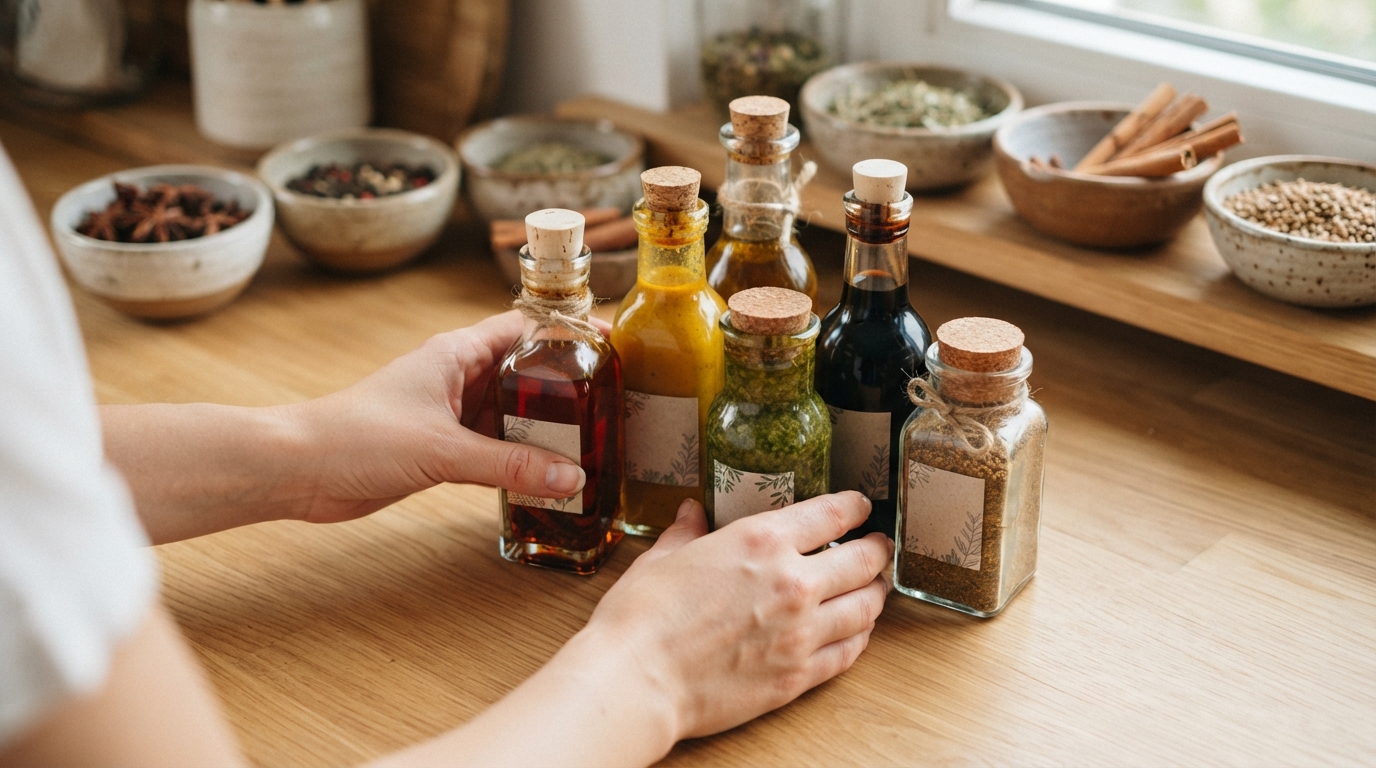
A sauce and seasoning factory depends on more than a good recipe. You need to turn formulation into repeatable production, with a consistent standard of flavor, shelf stability, packaging, and cost suited to the channel where you plan to sell.
This kind of business usually demands more attention to shelf life, quality control, labeling, and sanitary compliance than many food businesses. The decision to start matters less because of the product idea and more because of the ability to produce consistently and sell enough volume to sustain the operation.
- batch production
- product shelf life
- sanitary control
- mandatory labeling
What you need to understand before moving forward
Which product line will you start with?
You need to decide whether you will begin with ready-made sauces, dry seasonings, pastes, preserves, or a limited combination. Each product family changes the production technology, packaging type, shelf life, and level of control required.
Can your product handle the channel you chose?
Retail, wholesale, food service, and direct delivery require different structures. What matters here is checking whether the formulation, packaging, and shelf life can withstand the shelf time, transport, and turnover each channel demands.
Can you repeat the same standard in every batch?
In a factory, the recipe has to become a process. If flavor, texture, color, or viscosity vary too much from one batch to another, you create returns, lose trust, and make scaling harder.
What regulatory requirements apply to your product?
Sauces and seasonings may require different care depending on ingredients, preservation, labeling, and processing method. Before investing, you need to know which rules apply to your case and what they change in structure, documentation, and operation.
Who will buy again and again?
You need to identify whether demand comes from end consumers, stores, distributors, or professional kitchens. That defines repurchase rhythm, order size, and the sales effort needed to sustain production.
The critical points of this business
Offer
The offer needs to stay lean at the beginning. In a sauce and seasoning factory, expanding the mix too early usually makes ingredient purchasing, inventory control, standardization, and shelf life harder.
Operations
You need to validate whether the structure supports preparation, filling, sealing, storage, and cleaning without crossing flows in the wrong way. Small process mistakes here turn into batch loss, rework, and sanitary risk.
Regulation
Compliance is not a detail. Depending on the product, you need to organize sanitary requirements, labeling, traceability, and documentation before selling, because this affects the factory, the product, and the channel at the same time.
Financials
The main point is understanding unit cost, loss from shelf life, packaging needs, and working capital to buy inputs and sustain production. Without that, the apparent margin can hide an operation that is hard to keep running.
Channels
The channel decides the business format. A sauce sold directly to consumers does not require the same packaging, volume, or commercial policy as a product designed for retail or food service.
What can compromise the business
Starting with too many product variations
When the factory tries to launch too many flavors or product lines at once, operations lose consistency and inventory becomes harder to control. The better path is to validate a few items that can run predictably.
Ignoring the product's real shelf life
If the estimated shelf life is not compatible with sales and distribution time, you lose goods before inventory turns. You need to test preservation, packaging, and logistics before scaling production.
Building the structure before defining the channel
A factory planned without a defined channel tends to buy equipment, packaging, and capacity that are above or below what is needed. First you decide where you will sell, then you adjust the operation format.
Underestimating compliance requirements
Producing without understanding the applicable requirements can block sales or force expensive changes after the structure is already in place. This is especially true when the product involves preservation, sensitive ingredients, or sales to more demanding channels.
Turn these questions into decisions
In this business, what separates a good idea from a viable operation is clarity about product, channel, process, and cost. Vibz helps you organize these decisions before buying equipment, closing a facility, or expanding the mix.
Business Scope
Use this stage to turn the factory idea into a clear thesis: which products come first, what problem they solve, who they make sense for, and which bets need to be validated first.
Market Intelligence
Here you structure the analysis of demand, competition, buying profile, and entry strategy. This helps you decide whether it makes more sense to start with retail, food service, direct sales, or another entry route.
Operational Plan
This stage organizes how the factory will work in practice, from formulation to filling, including suppliers, team, storage, and channels. It is where you test whether the operation can support the product you want to sell.
Financial Modeling
Here you turn the decisions into numbers, including investment, costs, working capital, and projected cash flow. It is the stage that shows whether the chosen format holds up before you commit capital.
Before investing, you should know
- Which line of sauces or seasonings will you produce first?
- Which sales channel will receive your product at launch?
- What minimum shelf life do you need for your sales model?
- Which sanitary and labeling requirements apply to the chosen product?
- What monthly volume do you need to sell to justify the structure?
- How much will each unit cost once packaging, inputs, losses, and distribution are included?
Sua ideia merece mais do que um palpite. Estruture o negócio, teste suas premissas e entenda se ele faz sentido antes de comprometer tempo e dinheiro.
Planejar meu negócio no Vibz