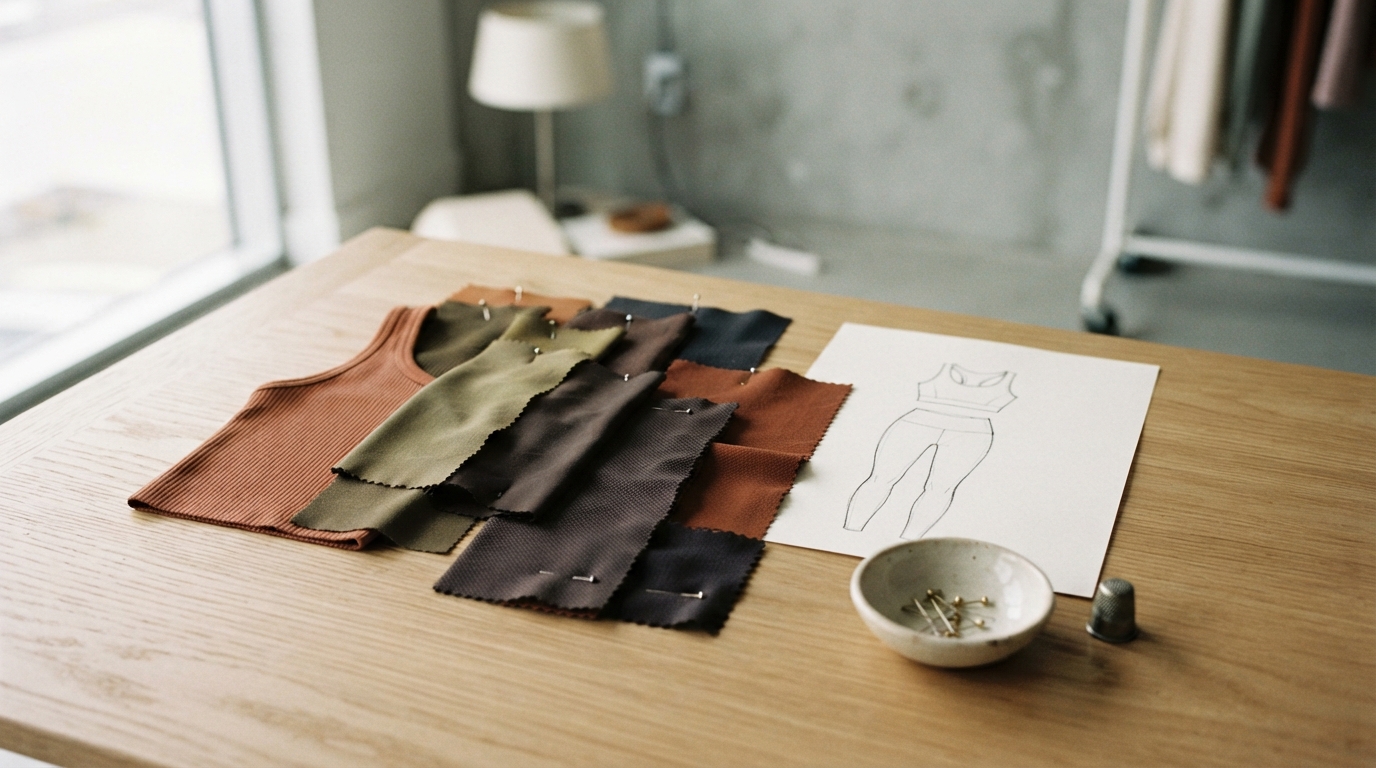
A clothing store depends less on selling “fashion” and more on getting the combination right between audience, collection, inventory buying, and replenishment. The same location can work very well with one product profile and fail with another, because what matters here is the fit between what you buy and what your customer is actually looking for.
It’s a business where a bad buying decision turns into money sitting still, and money sitting still turns into pressure on cash flow. That’s why, before opening, you need a clear view of who buys, how often they buy, what price range makes sense, and how much inventory you can carry without slowing the operation down.
- inventory buying
- collection turnover
- customer profile
- retail operations
What you need to understand before moving forward
Who is the customer you want to serve?
You need to define age range, buying style, price range, and purchase occasion. A clothing store without a clear audience usually mixes too many pieces and sells too little, because the inventory loses focus and the message gets weaker.
Will your model be private label, multi-brand, or a lean curation?
Each model requires a different logic for buying, display, and replenishment. That decision changes the size of your inventory, the range of sizes, and how fast you need to refresh the window.
What product turnover can you sustain?
Unsold clothing takes up space, ties up capital, and becomes commercially stale before it wears out physically. You need to estimate how many pieces can sit unsold and for how long without hurting cash flow.
Does your location work better for impulse buying or planned purchases?
A store in a high-traffic area needs a strong window, clear entrance, and quick product reading. In a destination location, customers accept more variety and browsing, but you depend on a strong reason to get them there.
What minimum assortment makes sense to start?
You need to decide how many categories you’ll open with, how many sizes each one will carry, and which pieces are entry items, fast movers, and margin drivers. An assortment that is too broad increases the risk of leftovers; one that is too narrow limits sales and makes the store feel incomplete.
How will you handle exchanges, size ranges, and seasonality?
Clothing stores deal with size variation, color preference, and seasonal shifts. If you don’t plan for that upfront, the operation ends up dealing with size gaps, stockouts on in-demand items, and markdowns too early.
The critical points of this business
Market
You need to understand whether people in the area buy clothing out of need, for an occasion, or for the desire to try something new. That defines ticket size, visit frequency, and the kind of collection that makes sense.
Offer
The store needs a clear proposal in terms of style, price range, and size depth. When the offer tries to please everyone, buying loses direction and the inventory becomes hard to sell.
Operations
The routine includes buying, receiving, checking, tagging, displaying, replenishing, exchanging, and loss control. If these processes are not designed before opening, the store becomes a chain of improvisations.
Financials
The investment doesn’t end when the store is set up. You need to calculate opening inventory, replenishment, turnover time, and the capital needed to make it through the first few months without relying on immediate sales.
Location
In clothing, the location changes the type of sales a lot. Foot traffic, surrounding businesses, passing customer profile, and how well the street matches the store’s positioning matter more than the space’s appearance alone.
Channels
Even with a physical store, you still need to decide whether you’ll also sell through direct service, pickup, local delivery, or digital presence. The channel changes inventory volume, display format, and replenishment rhythm.
What can compromise the business
Buying too much variety at the start
When the assortment starts out too large without demand testing, the store ends up with too many pieces in styles the local audience doesn’t choose. The way to avoid this is to start with a clear style thesis and expand only after seeing what actually moves.
Ignoring size range and replenishment
Clothing sells by size, color, and fit, not just by model. If you don’t plan size range and replenishment, you lose sales because the right size isn’t there and end up with items that are hard to clear.
Choosing the location based only on the window
A clothing store can look good from the outside and still be a poor fit for the audience you want to reach. The risk is paying for visibility without checking whether the surrounding area buys the kind of product you plan to sell.
Treating inventory as a one-time purchase
In fashion retail, inventory needs to be managed as an ongoing decision, not as a fixed list at opening. Without buying discipline, the store gets stuck with old stock and loses the agility to adjust its offer.
Mixing positions in the same store
Trying to sell basics, partywear, youth fashion, and formalwear in the same space usually confuses customers and weakens the display. The best approach is to choose a clear focus and protect that consistency in product, price, and window display.
What makes up the investment
Location fit
Store size, the need for a window, fitting rooms, and circulation space all change the investment. It also matters whether the space needs renovation, lighting, mirrors, racks, and display furniture.
Opening inventory
The amount depends on the number of categories, size depth, type of item, and the store’s positioning. A more focused operation requires less variety; a broader store requires much more capital tied up in merchandise.
Furniture and display
Racks, shelves, mannequins, hangers, mirrors, and fitting rooms vary according to the store format and the visual standard you want to maintain. The more organized the presentation, the greater the need for proper physical structure.
Systems and control
You need control over sales, incoming stock, outgoing stock, exchanges, and inventory counts. The size of the investment changes with the complexity of the assortment and the number of pieces that need to be tracked by size and category.
Licenses and compliance
The requirements vary depending on the address, the type of property, and the way the business will operate. If there is renovation, storefront use, or changes to the space, compliance may take more time and more steps before opening.
Working capital
This component changes depending on replenishment lead time, sales speed, and how long it takes for inventory to start turning. In a clothing store, cash needs to support early purchases, seasonality, and slower sales periods.
These components change from city to city and from project to project. In Vibz you build your business's investment with your own numbers. Calculate the investment in Vibz
Turn these questions into decisions
Before investing, you need to turn style, audience, and inventory into operational and financial decisions. That’s what keeps you from opening blind, with buying driven by taste instead of demand. In Vibz, you organize that analysis and bring the right questions into the plan.
Business Scope
Helps define the store’s thesis: audience, positioning, product type, and value proposition. That’s the starting point for avoiding mixed segments that require different operations.
Market Intelligence
Helps structure your reading of the surrounding area, the customer, and the competition you’ll actually face. For a clothing store, that guides price range, collection style, and entry strategy.
Operational Plan
Helps map out how the store will work in practice, from buying to customer service, including display, exchanges, and replenishment. In fashion, this step keeps the day-to-day from growing beyond what the structure can handle.
Financial Modeling
Helps turn inventory, location, structure, and working capital into a viability projection. This is where you understand whether the format you imagined fits the cash flow before committing money.
Before investing, you should know
- How many pieces do you need to sell per week to cover rent, staff, and replenishment?
- What price range is your customer willing to pay for the type of item you want to sell?
- How many categories and how many sizes can you manage without losing organization?
- How much of the investment should go into inventory, and how much needs to stay available as cash?
- Does your location attract the people who buy this kind of clothing, or do they only pass by the store?
- What will your policy be for exchanges, discounts, and clearing leftover stock?
Sua ideia merece mais do que um palpite. Estruture o negócio, teste suas premissas e entenda se ele faz sentido antes de comprometer tempo e dinheiro.
Planejar meu negócio no Vibz