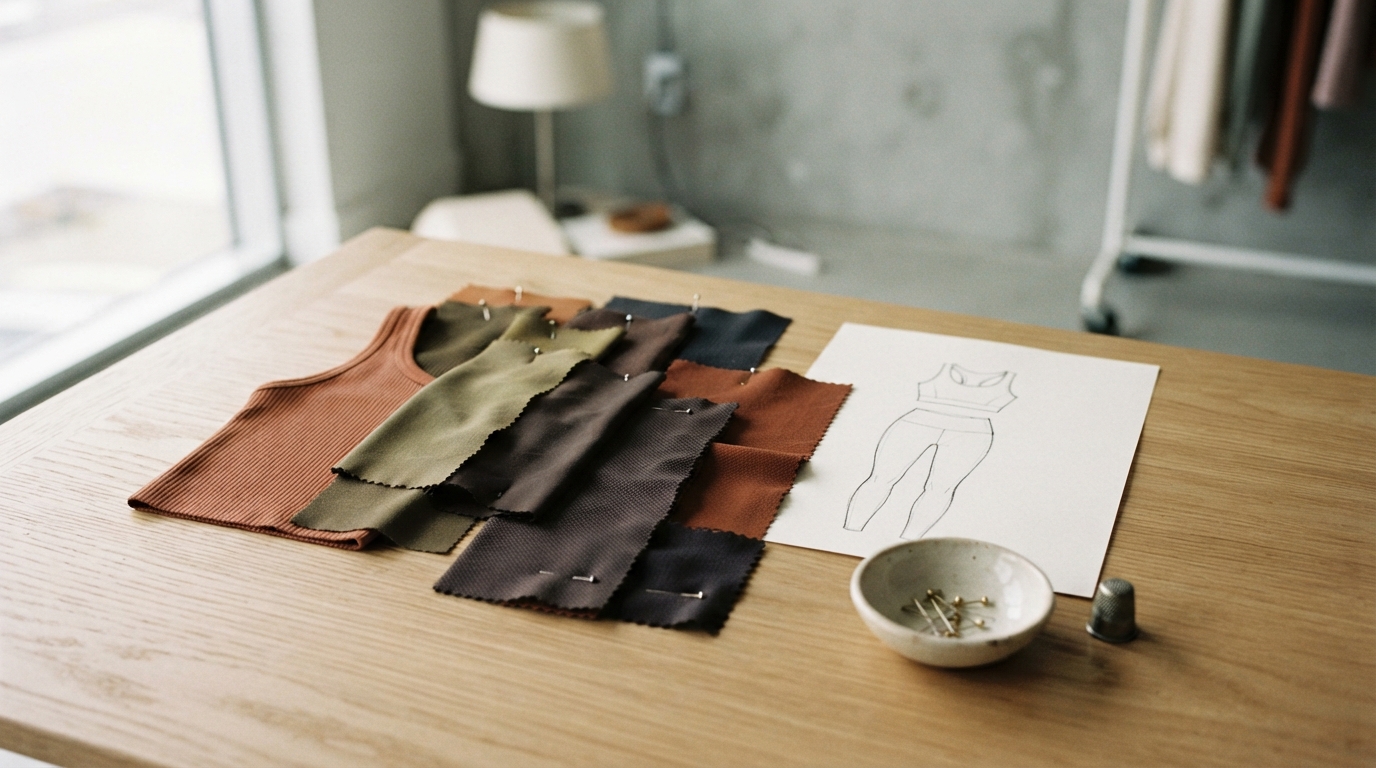
A plus-size fashion brand does not compete on aesthetics alone. It has to fit a range of bodies well, keep sizing consistent, and avoid returns caused by poor pattern work.
That changes how you plan the business. What may look like a regular clothing brand here depends on fittings, adjustments, a well-designed size range, and a more careful reading of the audience you want to serve.
- size range
- pattern making and fittings
- inventory by size curve
- repeat purchases
What you need to understand before moving forward
What size range will you serve?
You need to define how far your size range goes and which measurements it will be built on. Without that, the collection becomes generic, the fit loses consistency, and inventory turns into a mix that is hard to sell.
Does your audience buy for need or for style?
These two motives call for different offers. People buying out of need want reliable fit and replenishment; people buying for style accept more design variation, as long as the piece fits well.
Will you produce, outsource, or resell?
That choice changes control, timing, and margin. In-house production gives you more control over fit and adjustment, outsourcing requires very clear specifications, and reselling reduces control over size range and exclusivity.
What fitting standard will validate the fit?
You need to know who will fit the pieces and how you will record what needs to be adjusted. In this business, fit mistakes cost more than style mistakes, because they affect trust and repeat buying.
Which channel fits your initial operation?
Made-to-order, online store, and ready-to-ship require different inventory and service structures. The right channel is the one that fits your capital, your production timeline, and the way your customer decides to buy.
The critical points of this business
Market
You need to understand who buys plus-size fashion in your region or digital channel, what they already find, and where they feel frustrated with fit, size range, or variety. Without that reading, the brand risks seeming too broad and relevant too little.
Offer
The offer needs to combine pattern making, fabric, and style direction. If the piece fits well but feels too basic for the price, or if it looks good but fails in fit, repeat buying is compromised.
Operations
This business depends on a process for fitting, adjustment, and size-range control. You need to define how you will approve patterns, record changes, and avoid releasing a collection with variations that confuse the customer.
Financial
The math starts with the piece and does not end there. You need to project development cost, minimum order size, losses from exchanges, capital tied up in inventory, and the time it takes to turn production into sales.
Channels
The channel defines what kind of product makes sense to sell first. Online requires a clear tech pack, reliable photos, and a well-run exchange process; physical retail or wholesale require a size range and replenishment that match real turnover.
People
Whoever patterns, fits, serves, and sells needs to understand that plus size is not just about scaling up measurements. The team needs to talk about fit, comfort, and adjustment with precision, because customers notice when the brand treats that as a detail.
What can compromise the business
Wide size range without validation
Trying to start with too many sizes without testing demand and fit increases leftover inventory and operational confusion. The best approach is to start with the range you can produce and sell consistently.
Pattern adapted from standard clothing
Adjusting the measurements of a regular pattern without reviewing proportion, mobility, and fit usually creates a piece that wears poorly on real bodies. That shows up in returns, negative comments, and low repeat buying.
A collection driven only by trend
If the collection prioritizes trend and ignores comfort, fabric, and real use, the product may look appealing on display and weak in the fitting room. In this business, the piece has to work on the body before it convinces through image.
Inventory without a size curve
Buying equal quantities for every size usually traps capital in the slower-moving numbers and leaves shortages where demand is higher. The curve needs to be based on testing, observation, and sales history.
Selling without a clear exchange policy
Without an objective exchange and adjustment policy, the operation loses time and margin, especially when customers buy without trying on. The process needs to be defined before the first sale.
Turn these questions into decisions
In this kind of business, what determines viability is not just the brand idea, but the quality of the choices behind it. When you organize audience, offer, operations, and numbers before investing, it becomes easier to see what makes sense to start now and what still needs validation.
Business Scope
It helps you turn the brand idea into a clear thesis: who it sells to, what problem it solves, and which bets need to be true, such as size range, sales model, and value proposition.
Market Intelligence
It is used to structure your reading of demand, competition, buying behavior, and market entry, without confusing perception with evidence. Here you organize what you observed about the plus-size customer and the space your brand can occupy.
Operational Plan
This is the stage to map how the brand will work in practice, from pattern making to production, including suppliers, inventory, service, and channels. That helps reduce size-range errors, fitting failures, and disorganization in the first collection.
Financial Modeling
It turns decisions into numbers for investment, cost per piece, inventory, expenses, and cash flow. For plus-size fashion, this is what shows whether the collection fits the capital available and how long the operation can run without improvisation.
Before investing, you should know
- What size range will be included in the first collection?
- How many pieces do you need to sell per size to avoid inventory bottlenecks?
- What will be the total development cost of the first pattern set?
- Will you work with ready-to-ship, made-to-order, or pre-sale?
- Who will fit and approve the pieces?
- What exchange and adjustment policy can you sustain?
- Which channel will receive the first collection?
Sua ideia merece mais do que um palpite. Estruture o negócio, teste suas premissas e entenda se ele faz sentido antes de comprometer tempo e dinheiro.
Planejar meu negócio no Vibz